

The trajectory of a personal injury claim is often shaped long before the courtroom stage. Personal injury treatment delays frequently occur between the incident and the first medical evaluation, creating an evidentiary gap that defense counsel can exploit.
Delays stem from the mismatch between legal intake and medical activation, client hesitancy, logistical difficulties, or restricted specialist availability. When records do not document prompt evaluation, insurance carriers may categorize the claim as minor or soft-tissue-only, signaling a “red flag” for defense strategies.
Strategic case management must shift focus from workflow to evidentiary positioning. Pre-appointment signals, such as time elapsed before imaging, directly affect settlement leverage. Early inactivity can be regarded as reduced injury severity or attenuated causality, altering internal reserve setup and lowering negotiation ranges.
In practice, friction before the initial consultation might change how a claim is viewed, even when injuries are clinically serious. Personal injury treatment delays in this stage are a key determinant of downstream valuation and the overall strength of the case. For immediate case evaluation, you can contact us today.
Identifying the Pre-Appointment Evidentiary Vacuum
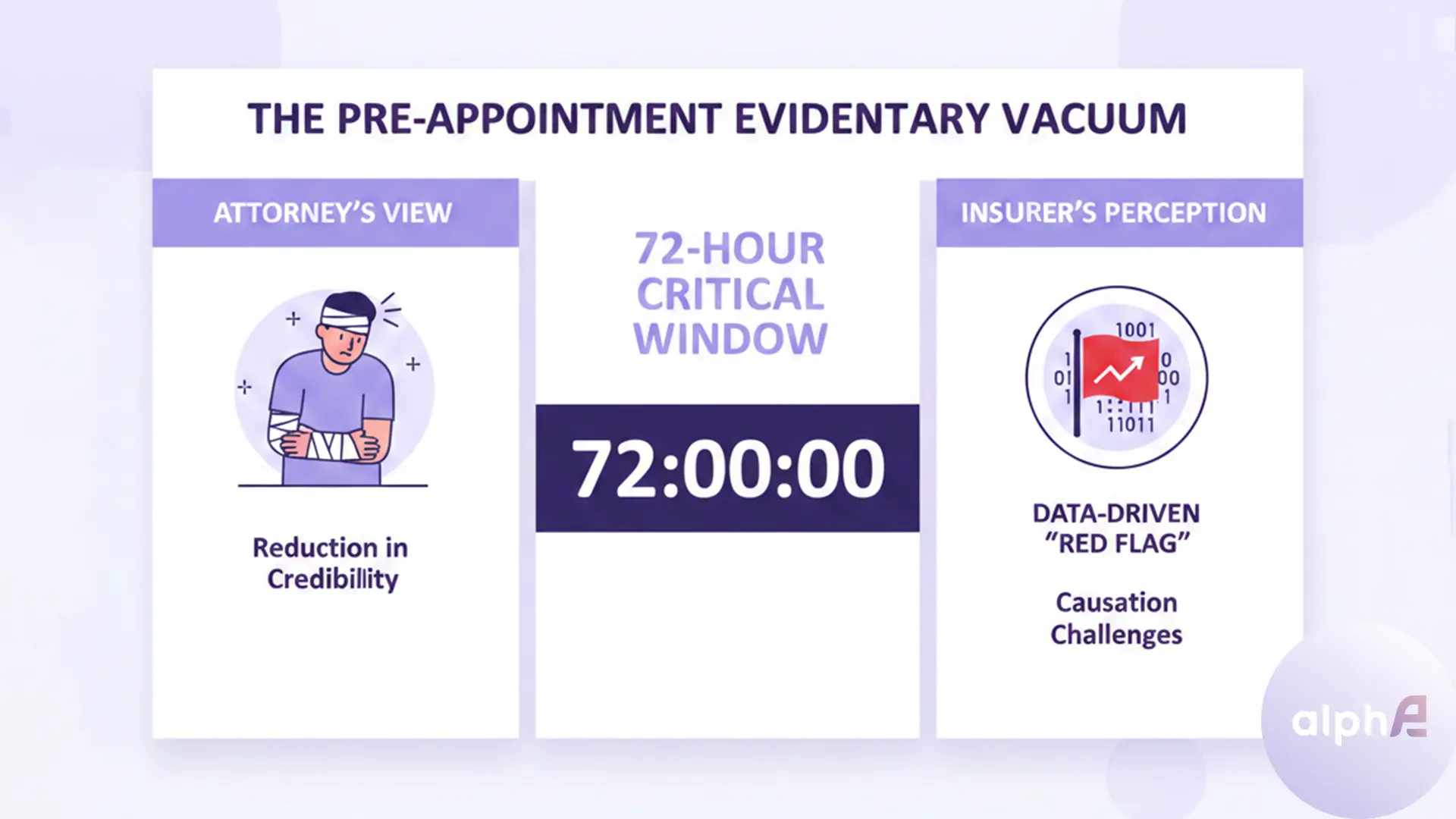
The pre-appointment phase is generally marked by a lack of objective data, which defense counsel strategically fills with alternate hypotheses of causation. When there is a significant period, defined by many adjusters as 72 hours or more, without clinical intervention, the “but for” test of legal causation becomes increasingly difficult to meet. This vacuum is not only a scheduling issue; it is a period where the evidentiary link between the incident and the injury is at its weakest.
Early Administrative Friction and Legal Risk
Administrative delays often stem from a misalignment between the firm’s intake department and the available medical network. If a firm relies on the client to find their own provider or navigate a complex insurance system, the result is almost always a delay. This friction is particularly damaging in cases involving spinal cord and back injuries, where early diagnostic imaging is the only way to prevent the defense from characterizing the injury as a pre-existing degenerative condition.
Client-Side Psychological Barriers to Early Care
Many accident victims delay seeking care because symptoms seem manageable at first or because they fear the overwhelming cost of medical bills. This psychological hesitation is frequently misinterpreted by insurance adjusters as an indicator that the injury was minor. Attorneys must recognize that the client’s perception of their own pain is legally irrelevant if it is not captured in a contemporary medical record, as the defense will always prioritize documented clinical findings over subjective client testimony.
Analytical Breakdown of Intake-Stage Risk Factors
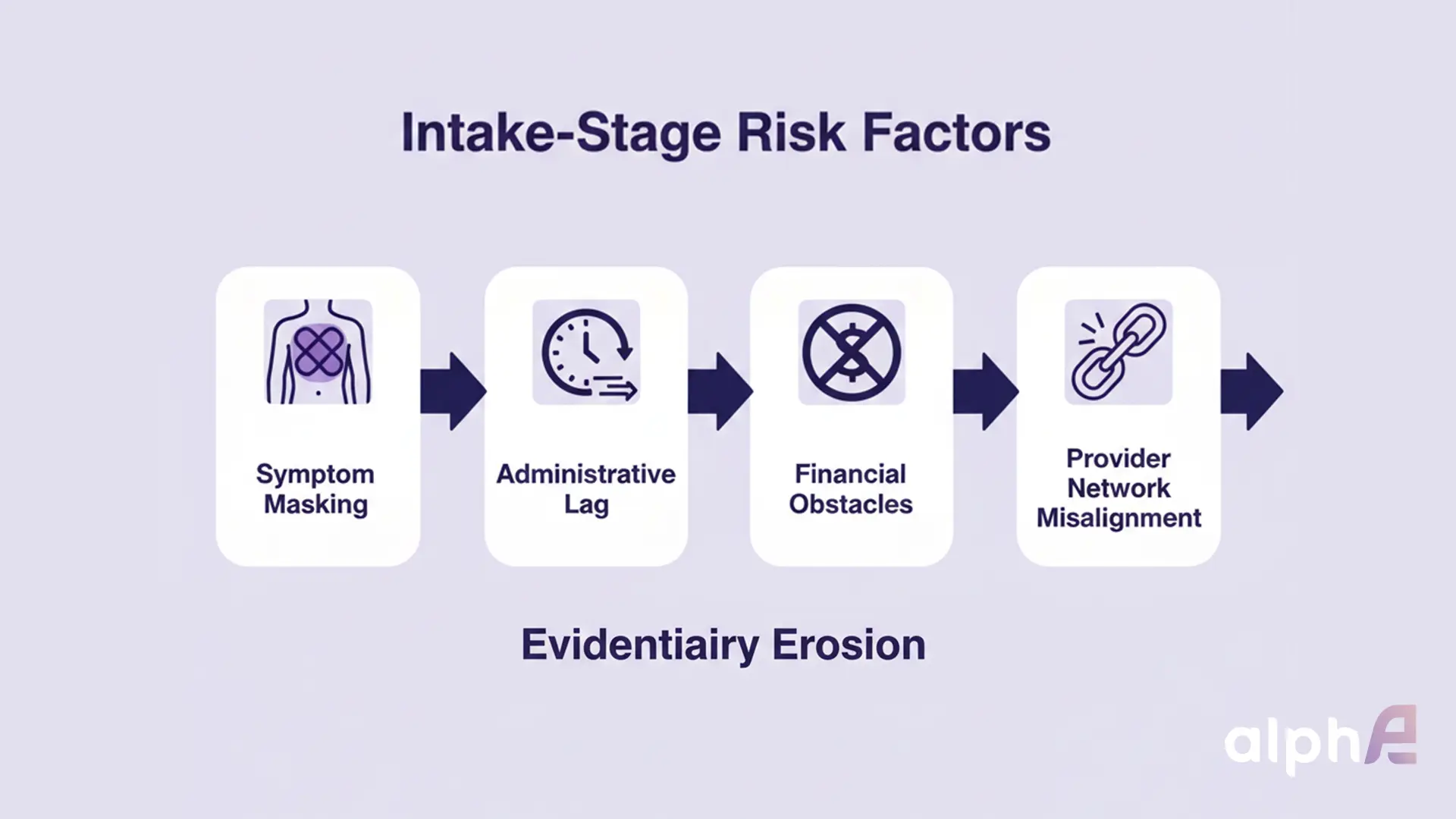
The formation of personal injury treatment delays is usually the result of specific, identifiable risk factors that emerge during the first 24 to 48 hours after intake. Analyzing these factors allows a firm to proactively manage case positioning before the defense can solidify its narrative.
- Symptom Masking and Delayed Onset: Injuries such as concussions or internal soft-tissue damage may not display immediate symptoms, causing clients to wait to “see how it goes”.
- Financial and Logistical Obstacles: A lack of transportation, childcare, or the inability to pay upfront charges provides a barrier to entrance for clinical care.
- Administrative Lag in Referrals: Internal firm delays in processing intake data and giving referrals might push the initial visit past the key 72-hour timeframe.
- Provider Network Misalignment: If the provider network is not skilled in treating accident-related injuries, they may not prioritize the diagnostic requirements of a PI claim. (Learn more about orthopedic injury protocols).
- Client Education Deficiencies: Clients often do not understand that their silence during the first few days constitutes evidence that will be used against them in future discussions.
These risk factors contribute to a cumulative delay that insurers track with high-resolution data. A firm that ignores these factors at the intake stage effectively cedes control of the medical narrative to the defense.
Insurer Perception and Exposure Modeling
Insurance carriers view treatment delays in personal injury cases as data points for exposure modeling rather than through empathy. Adjusters monitor any opportunity to shift fault, reduce payouts, or deny claims based on the timing of medical intervention. In jurisdictions, these early data points often set the initial reserve amounts.
When a treatment gap occurs, insurers typically respond in three ways:
- Reduction in Credibility: Delayed or inconsistent treatment suggests the injury was not serious.
- Causation Challenges: Adjusters may question whether an intervening event caused the injury.
- Damages Mitigation Defenses: Delays are cited to argue that timely care could have prevented worsening.
As a result, the settlement offer often reflects the “average” value of similar delay profiles, making it difficult for attorneys to negotiate toward the high end.
In jurisdictions like Texas, we at alphaE track pre-appointment signals closely in car accident injuries to ensure cases are positioned for optimal settlement leverage from the start.
Pre-Appointment Delay Signals and Valuation Impact
The valuation of a claim is inextricably linked to the velocity of treatment. Personal injury treatment delays generate early temporal signals that carriers use to recalibrate exposure assumptions before negotiations even begin. What causes delays in personal injury treatment is often less important than how those delays are interpreted within internal reserve frameworks. These early signals can significantly influence how insurers perceive injury severity, permanency, and the credibility of the claimant.
Early Evaluation Gaps
When more than 72 hours pass without a clinical evaluation, the absence of documentation may be interpreted as diminished injury urgency. Carriers frequently view this window as the first credibility filter in reserve assessment. Delays at this stage often create a lasting impression that can affect both economic and non-economic damages calculations.
Diagnostic Lag and Pathology Framing
If primary imaging is delayed for weeks after intake, insurers may frame the pathology as degenerative rather than acute. The longer the diagnostic silence, the easier it becomes for the defense to decouple the injury from the triggering event. Early diagnostic records are critical not just for establishing causation but also for supporting future treatment projections and expert testimony.
Specialist Delay and Narrative Weakening
Extended gaps between initial evaluation and specialist consultation create weaknesses in the medical chronology. In spinal and soft-tissue claims, these lags are often used to challenge permanency, limit treatment, or question the need for future care. Timely specialist evaluation strengthens the medical narrative and reduces opportunities for defense argumentation.
Behavioral Follow-Through Signals
Repeated rescheduling or inconsistent early follow-up may be interpreted as behavioral inconsistency. While not medically determinative, these patterns influence perceived credibility within exposure modeling. Carriers may infer the plaintiff’s pain is exaggerated or the injury is minor if follow-up appears erratic.
These interpretations shape reserve setting and early valuation. By the time a demand package is assembled, initial delay signals may have already narrowed the negotiation corridor. Recognizing and mitigating pre-appointment delays is essential to maintain settlement leverage and protect the case’s valuation potential.
Evidentiary Erosion and the Causation Challenge
The most significant consequence of why treatment is delayed after intake is the erosion of the evidentiary link required to prove causation. Under personal injury law, the plaintiff must show a clear connection between the defendant’s negligence and the specific injuries claimed. Every day that passes without a medical record connecting the pain to the accident is a day where that link becomes more tenuous.
The Problem of Intervening Events
If a client waits two weeks to see a doctor for back pain, the defense will argue that the pain could have been caused by any number of everyday activities, lifting groceries, a minor fall at home, or sports that occurred during those fourteen days. This “intervening event” defense is a direct result of the pre-appointment delay and can be nearly impossible to disprove without a contemporary medical record.
The Impact on Expert Credibility
Medical experts rely on early records to form their opinions on permanency and future care needs. When the initial records are delayed or incomplete, the expert’s testimony is vulnerable to cross-examination. The defense will use the gap to suggest the expert is “speculating” about the injury’s origin, further devaluing the claim in the eyes of a jury or mediator.
Conclusion
Injury treatment delays often originate at the earliest stages of a claim, and when untreated, they can shift the balance of power toward insurers. Recognizing why treatment is delayed after intake allows law firms to address gaps before they undermine the case. By prioritizing prompt clinical activation and clear documentation, attorneys can maintain strong settlement leverage.
Understanding what causes delays in personal injury treatment, whether client hesitation, logistical obstacles, or limited provider access, is essential for preserving the evidentiary link between the incident and the injury.
Treatment delays in personal injury cases should be anticipated and mitigated as part of a proactive case strategy. By doing so, firms can present a coherent, chronological medical narrative that minimizes defense challenges and maximizes valuation potential.