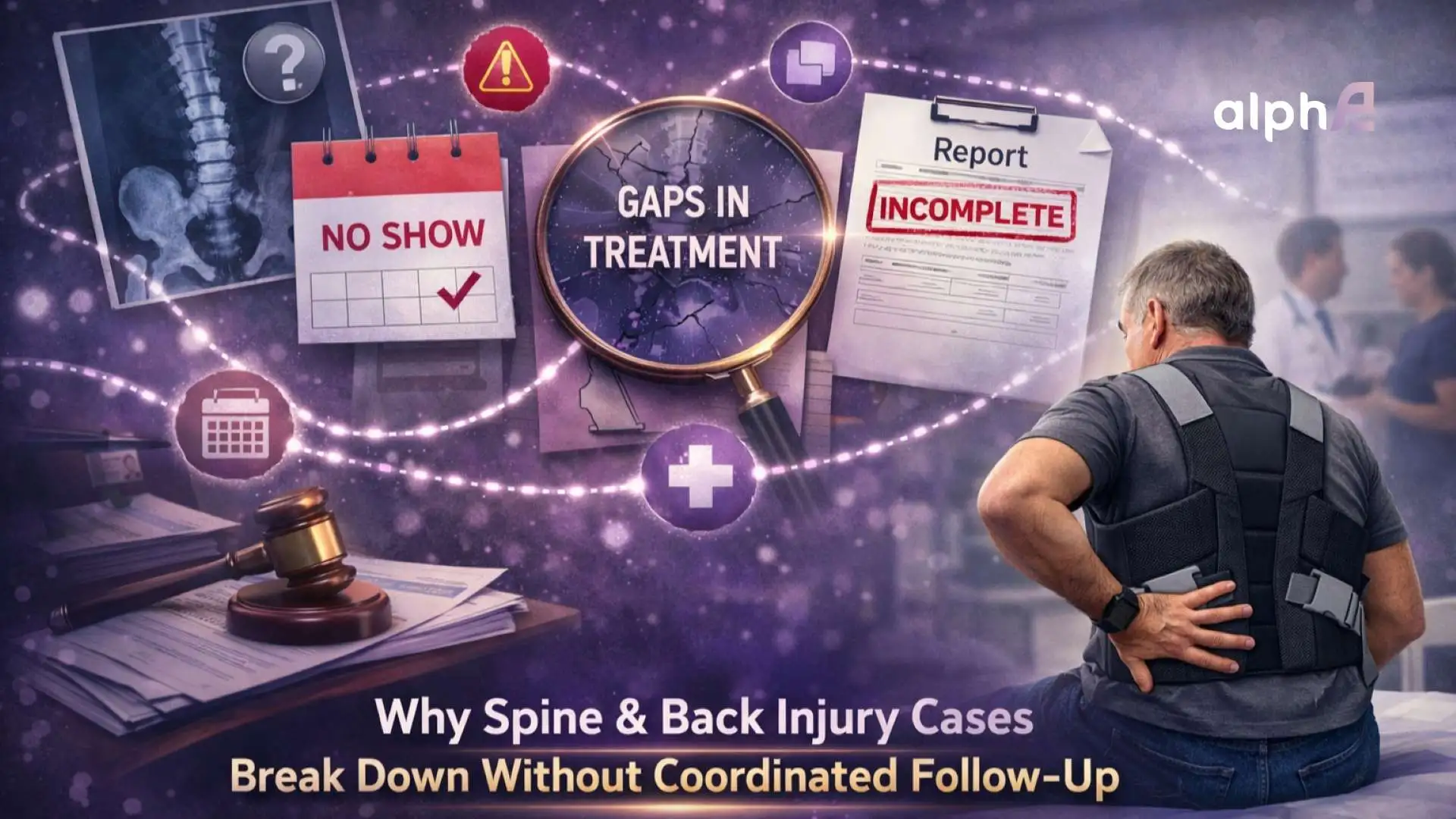
Spine and back injury cases are some of the most common and most vulnerable claims in personal injury litigation. While these injuries may seem straightforward at intake, they often become difficult to defend when treatment is not followed closely and documented consistently.
Unlike injuries with a short, predictable course of care, spine-related conditions often require ongoing evaluation, provider-to-provider coordination, and careful monitoring over time. When that process breaks down, gaps begin to appear in the medical record. Those gaps can raise questions about symptom progression, treatment necessity, and the overall strength of the claim.
In many cases, spine claims do not weaken because the injury itself is unclear. They weaken because the treatment timeline becomes fragmented, follow-up is inconsistent, and documentation loses continuity. This is where spine injury treatment coordination becomes critical. Without a structured treatment path and organized follow-up, even legitimate spine injuries can become harder to support, explain, and defend.
Why Spine Injuries Require Continuous Follow-Up
Spine injuries rarely resolve through a single visit or a one-time diagnosis. Conditions such as herniated discs, nerve compression, and soft tissue damage often change over time, with symptoms that may improve, worsen, or shift depending on activity level, treatment response, and underlying structural issues.
Because of that, continuous follow-up is not just part of treatment. It is what creates a clear and defensible medical timeline. In a well-managed case, follow-up appointments document how the condition progresses, how the patient responds to care, and whether additional evaluation or treatment becomes necessary. That continuity helps physicians support their findings and gives attorneys a more complete record of the injury’s impact over time.
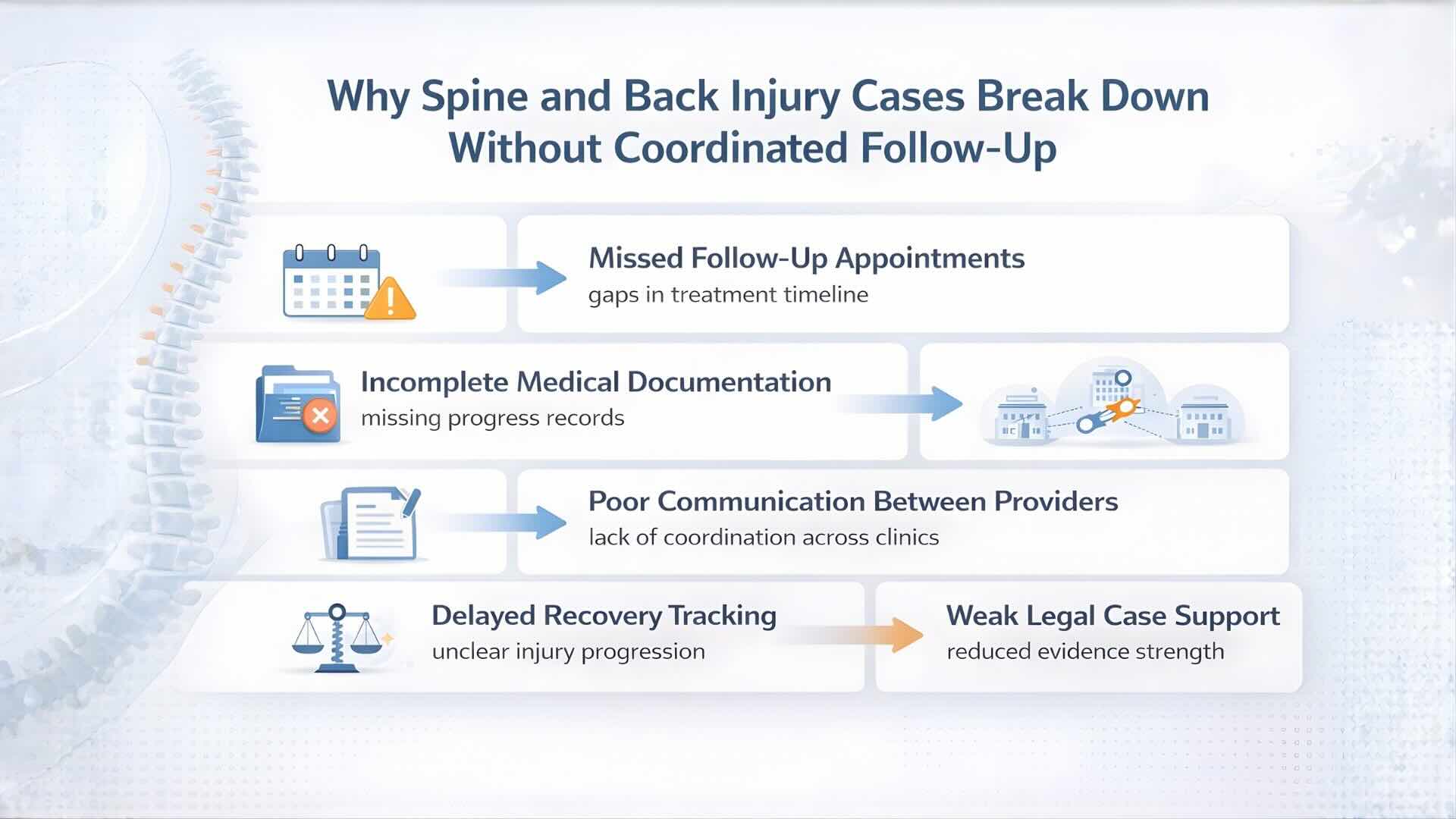
When follow-up becomes inconsistent, that timeline starts to break down. Patients may miss appointments, postpone imaging, or stop therapy before the treatment plan is complete. As those interruptions accumulate, the medical record becomes less cohesive. Instead of showing a clear progression of symptoms and care, it begins to reflect delays, missing context, and avoidable uncertainty.
Even relatively small disruptions in care can affect how the case is evaluated. A missed visit may seem minor on its own, but repeated gaps can make the injury appear less consistent, reduce confidence in the treatment history, and create more room for scrutiny during claim review. In spine cases especially, continuity of care is often what separates a well-supported claim from one that becomes harder to explain and defend.
The Hidden Risk of Gaps in Treatment Documentation
In spine injury claims, treatment documentation does more than reflect medical care. It helps establish whether the injury was taken seriously, whether symptoms persisted over time, and whether the course of treatment supports the damages being claimed. That is why gaps in documentation can create problems well beyond the medical record itself.
Why Gaps Raise Red Flags in Claims
Insurance carriers and defense counsel often look closely at whether care was timely, consistent, and adequately documented after the initial evaluation. When that continuity is missing, several questions tend to follow. Did the symptoms improve sooner than claimed? Was the injury significant enough to require ongoing care? Or is there uncertainty about whether the condition is truly connected to the underlying incident?
Even when those assumptions are inaccurate, inconsistent documentation makes them harder to rebut.
Common breakdown points in spine injury cases include:
- missed follow-up visits after the initial evaluation
- delays between imaging, specialist review, and treatment recommendations
- inconsistent symptom reporting across providers or across multiple visits
Each of these issues can interrupt the medical narrative. Over time, those interruptions make it harder to clearly show causation, severity, treatment necessity, and long-term impact.
A well-documented spine case presents a continuous and credible record of what happened, how the condition progressed, and why ongoing care was necessary. A fragmented record does the opposite. It creates room for interpretation, and in litigation, that uncertainty rarely benefits the injured party.
Why Spine Injury Cases Require Multiple Specialists
One of the defining features of spine injury cases is that they often require input from multiple specialists. Unlike more straightforward injuries, spine-related conditions can involve structural damage, neurological symptoms, pain management issues, and functional limitations at the same time.
The Challenge of Aligning Multiple Providers
Because of that complexity, patients are often referred to several providers over the course of care, including orthopedic specialists, neurologists, pain management physicians, and rehabilitation providers. This multi-specialist approach is often medically necessary, but it also creates one of the most common breakdown points in spine injury claims.
Each provider evaluates the injury through a different clinical lens. One may focus on imaging findings, another on neurological symptoms, and another on functional recovery. Without coordination, those perspectives may be documented accurately in isolation but still fail to support a clear, unified treatment narrative.
That is where many spine cases begin to lose strength. When specialists work independently without alignment, the case becomes segmented. The records may be individually valid, but the overall picture can start to look inconsistent, incomplete, or difficult to interpret. In claim review or litigation, those inconsistencies can quickly become a point of scrutiny.

How Lack of Coordination Disrupts the Case Timeline
When multiple providers are involved in a spine injury case, coordination becomes just as important as the diagnosis itself. Each stage of care should connect logically to the next, with referrals, treatment decisions, and follow-up documentation reinforcing a clear progression of the injury.
Where Case Timelines Begin to Break Down
When that continuity is missing, the case timeline can start to weaken quickly. A patient may see an orthopedic provider who recommends physical therapy, but if therapy is delayed, interrupted, or never completed, the treatment path begins to look inconsistent. Later evaluations may then appear disconnected from earlier findings, even when the underlying injury has remained the same.
As these breakdowns accumulate, the medical record becomes more fragmented. Differences in timing, terminology, or symptom reporting can make the course of care harder to follow and easier to challenge. In claim review, insurance adjusters and defense counsel often use those inconsistencies to question whether the treatment path was medically necessary, properly managed, or fully related to the original incident.
Without coordination, the case timeline stops reflecting a clear sequence of medical decision-making and begins to read more like a series of disconnected events. That shift can reduce the overall persuasiveness of the claim and make even legitimate injuries harder to support. For a closer look at how treatment delays can affect claim strength, see our breakdown of treatment delays and case value.
A Real-World Breakdown Scenario
Consider a common spine injury case. A patient is involved in a car accident, reports lower back pain, and is referred for imaging and physical therapy. After a few sessions, symptoms temporarily improve and treatment stops.
Weeks later, the pain returns, and another provider identifies possible nerve involvement. By then, the case may already show gaps in treatment, changes in documentation, and a less consistent timeline.
The injury may still be legitimate, but the record no longer shows a clear progression of care. In spine injury claims, even a short interruption in follow-up can create larger problems when the case is reviewed.
The Role of Structured Follow-Up in Case Strength
Consistent follow-up does more than monitor recovery. It helps establish the structure of the case itself.
Consistent follow-up does more than track recovery. It helps build the medical timeline that supports the claim.
Building a Strong Medical Narrative
Each visit adds context to the record. Symptoms are documented, treatment response is assessed, and the progression of the injury becomes easier to follow.
In well-coordinated spine cases, follow-up helps ensure:
- symptoms are documented consistently over time
- treatment recommendations are carried out as intended
- provider records support a more unified treatment history
That consistency makes it easier to show causation, treatment necessity, and long-term impact. It also reduces the inconsistencies that often create disputes during claim review.
Why Timing Matters in Spine Injury Coordination
Timing is one of the most important and most easily overlooked factors in spine injury cases. Even when treatment is medically appropriate, delays between key stages of care can weaken how the claim is understood and evaluated.
How Delays Affect Case Perception
A delay between diagnosis and treatment may suggest uncertainty about the severity of the injury. A delay between follow-up visits may create the impression that symptoms improved, even when they did not.
Those gaps in timing can affect how the treatment record is interpreted during claim review. That is why spine injury treatment coordination depends not only on choosing the right providers, but also on maintaining timely progression between each stage of care.
Consistent timing supports continuity. It helps show that symptoms remained active, treatment was necessary, and the injury required ongoing attention rather than short-term care.
How Early Coordination Prevents Long-Term Issues
The earlier coordination begins, the more stable the case is likely to remain. Early structure gives providers and legal teams a clearer framework for documenting symptoms, managing referrals, and maintaining continuity throughout treatment.
Why Early Structure Determines Case Outcome
From the initial intake forward, the case should follow a structured plan that includes timely referrals, consistent follow-up, and aligned documentation across providers.
When that coordination is established early, many of the breakdowns that weaken spine injury claims can be avoided. Patients are more likely to stay on track with care, provider records remain more consistent, and the treatment timeline is easier to support from start to finish.
A proactive structure at the beginning of the case is often what prevents avoidable issues later. Instead of trying to repair gaps after they appear, early coordination helps keep the claim organized, credible, and easier to defend.
For spine and back injury cases, alphaE helps keep treatment coordinated, documentation consistent, and the case timeline easier to support.
Conclusion
Spine and back injury cases often weaken not because the injury is unclear, but because the treatment process becomes inconsistent.
When follow-up is unstructured, the medical record becomes fragmented. That can weaken causation, create uncertainty, and make the claim harder to defend.
Strong spine injury treatment coordination helps keep the timeline consistent, provider documentation aligned, and the overall case easier to support. When coordination is missing, even legitimate claims can lose credibility.