

After a car accident, most injured individuals focus on immediate concerns such as pain, vehicle damage, and communicating with insurance companies. However, another important process often begins immediately after the accident, even if the injured client is not yet aware of it. At this stage, attorneys typically connect injured clients with medical providers who can evaluate accident-related injuries, begin treatment, and properly document those injuries from the start.
In personal injury litigation, this step is commonly referred to as the car accident medical referral process. It describes how attorneys connect injured clients with physicians who understand accident-related injuries and the medical documentation required in personal injury claims. While many accident victims assume they must find a doctor on their own, attorneys frequently assist with treatment coordination to ensure that injuries are evaluated quickly and documented properly.
The car accident treatment referral process plays a critical role in the early stages of a personal injury claim. Medical records created shortly after a collision often become critical evidence in personal injury litigation. These records help establish the injury timeline, confirm the diagnosis, and explain how the accident affected the injured person’s daily life.
According to the National Highway Traffic Safety Administration (NHTSA), millions of vehicle crashes occur each year in the United States, many of which lead to injuries that require both medical evaluation and legal documentation. Understanding how accident clients are referred to medical providers is therefore important for both attorneys and injured individuals involved in personal injury claims.
After a car accident, injured individuals often require both medical treatment and legal support to properly document their injuries and begin the claims process.
Why the Medical Referral Process Matters in Car Accident Claims
Insurance companies rarely evaluate personal injury claims based only on the accident itself. Instead, they closely examine the treatment timeline, the medical records created by healthcare providers, and diagnostic findings that confirm the injury.
One of the first questions insurance adjusters often ask is how quickly the injured person sought medical evaluation after the crash. When treatment begins soon after the accident, medical records usually create a clear connection between the collision and the injury. When treatment is delayed, however, insurance companies may argue that the injury developed later or is not causally related to the accident.
Legal professionals frequently emphasize the importance of early medical documentation. Legal publications associated with the American Bar Association often note that prompt medical evaluation strengthens injury claims by helping establish causation between the accident and the injury.
Because of this, attorneys often treat the car accident medical referral process as a critical part of the injury case timeline. In many cases, this stage is also part of the broader personal injury medical referral process, where attorneys coordinate medical evaluations with providers experienced in accident-related injuries. Early referrals allow injured clients to be evaluated by the appropriate specialists while their symptoms are still clearly associated with the accident.
Coordination between legal teams and healthcare providers is also essential in personal injury cases. When treatment begins quickly and documentation is consistent, it becomes easier to show how the injury appeared and progressed after the collision. A reliable referral network allows attorneys to connect injured clients with medical providers who understand accident injuries and proper medical documentation.
The Legal Intake That Starts the Referral Process
Before referring a client to a medical provider, attorneys must first understand the circumstances of the accident and the symptoms the injured individual is experiencing. This stage typically begins during the legal intake process.
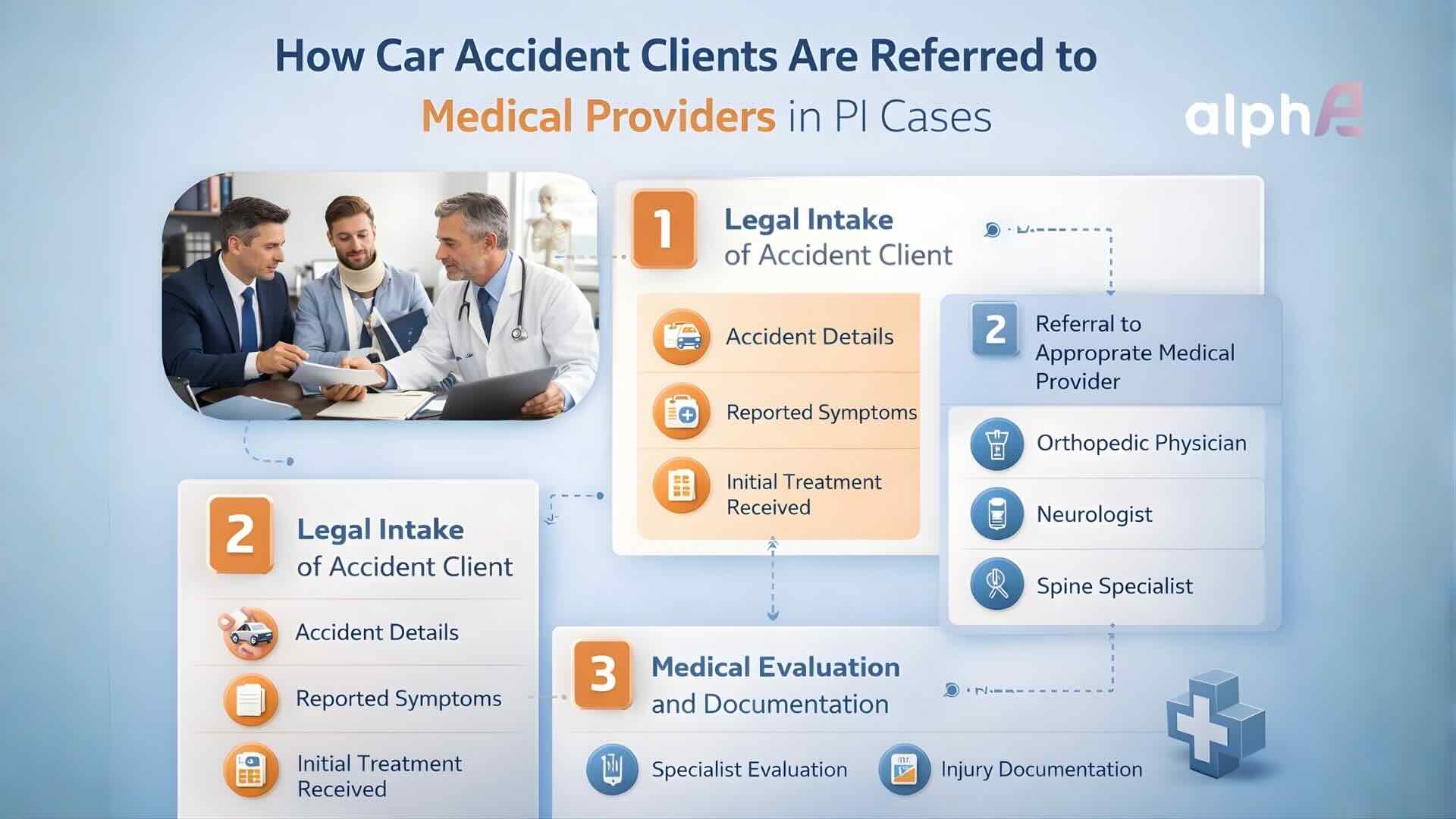
During intake, attorneys collect detailed information about the collision and the injuries reported by the client. This information allows the legal team to evaluate the potential claim and determine whether the injured individual should be referred to a specialist.

Information Attorneys Gather During Intake
During the intake stage, attorneys usually focus on several important details that guide the referral decision.
- how the accident occurred and which vehicles were involved
- symptoms the injured individual experienced after the crash
- whether the client has already received emergency or urgent care
These details help attorneys determine whether the injured client should be evaluated by a specialist and what type of medical provider may be most appropriate. In many cases, this is the stage where the car accident treatment referral process begins.
The following diagram illustrates how the medical referral process works in a typical personal injury case.
How Attorneys Choose the Right Medical Provider
Selecting the correct physician is one of the most important steps in the referral process. Different accident injuries require different medical specialties, and referring a client to the right provider can influence both treatment outcomes and the strength of the medical documentation.
Personal injury attorneys often work with physicians who regularly evaluate accident victims and understand how to document injuries for legal claims.
Medical Specialists Commonly Involved in Accident Cases
Several types of specialists frequently participate in the car accident medical referral process.
- orthopedic physicians who evaluate bone, joint, and musculoskeletal injuries
- neurologists who assess nerve damage or head trauma
- spine specialists who diagnose neck and back injuries
Choosing the correct specialist helps ensure that the injury is evaluated properly and that diagnostic testing is ordered when necessary. For example, after a rear-end collision, an attorney may refer a client experiencing persistent neck pain to a spine specialist who can evaluate possible whiplash injuries and order diagnostic imaging such as an MRI if necessary. Many car accidents result in neck or spinal trauma that requires evaluation by physicians experienced in spinal injuries.
alphaE provides additional detail on how these injuries are evaluated and treated on this page on car accident injury treatment coordination: https://www.alphae.marketing/case-types/car-accident-injuries
Letters of Protection and Access to Medical Treatment
A common concern for accident victims is how they will pay for medical treatment. Diagnostic imaging, specialist consultations, and rehabilitation therapy can become expensive, especially when injured individuals cannot immediately return to work.
To address this issue, many personal injury cases rely on financial arrangements known as Letters of Protection (LOP).
A Letter of Protection is an agreement between the attorney and the medical provider stating that the provider will treat the patient without requiring immediate payment. Instead, payment for medical services is postponed until the injury claim is resolved.
This arrangement allows injured clients to receive medical treatment even if they cannot afford the upfront costs. It also ensures that physicians continue documenting the injury throughout the recovery process, which can strengthen the overall claim.

What Happens After the Medical Referral
Once the referral is made, the injured client usually attends an initial evaluation with the recommended medical specialist. This appointment establishes the medical foundation of the injury claim and begins the process of documenting the injury.
Steps During the First Specialist Evaluation
During the first appointment, physicians usually perform several important steps to evaluate the injury.
- reviewing the patient’s explanation of how the accident occurred
- documenting symptoms such as pain, stiffness, or neurological changes
- performing a physical examination of the affected body areas
Based on the findings from this evaluation, the physician may recommend diagnostic tests such as MRI scans or CT imaging. These tests provide objective medical evidence that helps confirm the diagnosis.
The physician may also develop a treatment plan that includes therapy, follow-up appointments, or additional specialist consultations depending on the severity of the injury.
How Early Treatment Supports Personal Injury Claims
Medical documentation created shortly after an accident often becomes one of the most important forms of evidence in personal injury litigation. Attorneys rely on these records to demonstrate that the injury resulted directly from the collision and required medical treatment.
When the medical referral stage in PI cases begins quickly, physicians start documenting symptoms while those symptoms are still clearly tied to the accident. This documentation creates a clear medical timeline showing when symptoms first appeared and how the injury progressed.
Insurance companies frequently analyze this timeline when evaluating claims. Consistent treatment records, diagnostic imaging, and physician reports make it easier to demonstrate that the injury was caused by the crash rather than another event.
Delays in treatment can create complications because insurance companies may question whether the injury is truly related to the accident. Many legal professionals emphasize how critical early documentation can be for establishing causation in injury cases. For a deeper explanation, you can read more about how treatment delays affect personal injury cases.
Common Challenges in the Referral Process
Although the referral process is designed to help accident victims receive medical care quickly, several factors can still create delays. Some injured individuals underestimate their injuries and postpone medical appointments because they believe their symptoms will improve without treatment.
Others may seek care from physicians who are unfamiliar with accident-related documentation. While these providers may offer appropriate care, their reports may not address the legal issues that often arise in a personal injury claim.
Mistakes That Can Delay Medical Referrals
Several common issues can interfere with the process of sending accident clients to medical providers.
- waiting too long before scheduling the first specialist appointment
- visiting providers unfamiliar with injury documentation requirements
- failing to report all accident-related symptoms during the medical evaluation
Avoiding these issues helps ensure that the medical record accurately reflects the injury and supports the development of the legal case.
Conclusion
The accident referral process is one of the most important early stages of a personal injury claim. While the referral itself may seem like a simple administrative step, it plays a critical role in connecting the legal and medical sides of an injury case.
Through careful intake, physician selection, and treatment coordination, attorneys help ensure that accident victims receive appropriate medical care while their injuries are properly documented. These medical records later become essential evidence in personal injury litigation.
Understanding how the car accident treatment referral process works helps both attorneys and injured clients ensure that medical treatment begins quickly and that injuries are documented correctly from the earliest stages of the case.