
Orthopedic injury cases often become harder to support when follow-up care becomes inconsistent or incomplete. Once treatment continuity is disrupted and the medical record becomes inconsistent, the case becomes more difficult to interpret, document, and ultimately defend.
A patient experiences pain, receives an initial diagnosis, and begins treatment. At first, the process feels organized and under control. However, over time, appointments may be delayed, symptoms may evolve, and providers may begin documenting different aspects of recovery without clear coordination. When that happens, the medical narrative starts to fragment. This is exactly why orthopedic injury follow-up plays such a critical role in personal injury claims.
In the early stages, many orthopedic injuries seem manageable. A fracture may appear stable. A shoulder injury may initially look like nothing more than stiffness. A knee injury may resemble a mild strain. But these cases are rarely static. Pain can intensify, mobility may decline, and new symptoms may surface later in the recovery process. Without consistent orthopedic injury follow-up, these changes may never be fully captured, leading to gaps in documentation and reduced case clarity.
Professionals managing orthopedic injury cases see this pattern repeatedly. The first visit rarely defines the full trajectory. Injury progression unfolds over time, and each phase affects treatment decisions, documentation quality, and case strength. That is why ongoing care in orthopedic cases is not just a clinical concern, but a factor that directly shapes how the case is evaluated.
What Is Orthopedic Injury Follow-Up?
Orthopedic injury follow-up is the ongoing process of re-evaluating, documenting, and managing an injury after the initial diagnosis. Its purpose is not just to confirm that treatment began, but to show how the condition changes over time, how the patient responds to care, and whether recovery is progressing as expected.
In personal injury cases, follow-up also helps preserve a clear medical timeline. It documents symptom progression, functional limitations, and treatment decisions in a way that supports both recovery and the overall strength of the claim.
Why Orthopedic Injury Cases Require Ongoing Follow-Up
Orthopedic injury cases require ongoing follow-up because the full impact of the injury is not always clear during the first evaluation. Pain levels may change, movement limitations may become more noticeable over time, and treatment plans often need to be adjusted as recovery progresses.
Without continued follow-up, the medical record may capture only the starting point of the injury rather than its full development. That creates problems for both treatment and case support. Ongoing documentation is what helps show whether the patient is improving, whether symptoms are worsening, and whether additional care is medically necessary.
Orthopedic Injuries Often Look Simpler Than They Are
Orthopedic injuries can include fractures, ligament tears, joint trauma, soft tissue damage, and spine-related conditions. While these injuries may initially appear straightforward, they often become more complex as recovery progresses.
The core challenge is variability. Some patients improve quickly and then plateau. Others feel minimal discomfort initially but develop more serious limitations later. In many cases, symptoms are not fully clear until weeks into treatment. This delayed progression is one of the main reasons orthopedic injury follow-up must remain consistent.
In multi-area injuries, complexity increases further. A knee injury may affect movement patterns, placing stress on the hip or spine. What begins as a localized issue can evolve into a broader musculoskeletal condition. This is why continuous monitoring is essential in managing orthopedic injury cases.
For example, spine-related injuries such as herniated discs can lead to nerve compression and long-term complications, as shown below

Why Early Treatment Alone Is Not Enough
Initial treatment matters, but it is rarely the full story. The first evaluation identifies immediate concerns, but it does not define the full medical trajectory.
Why Orthopedic Symptoms Often Change After the First Visit
Patients may initially report pain and stiffness but later experience instability, weakness, or reduced function. A shoulder may fail to regain strength. A knee may continue swelling. A spinal condition may require further evaluation when recovery slows. This is a key reason why orthopedic cases require ongoing care.
Why the Treatment Timeline Is Critical for Case Strength
In personal injury claims, treatment is evaluated chronologically. Legal teams assess when care began, how symptoms evolved, and whether treatment remained consistent. Gaps in care disrupt medical timeline clarity and weaken credibility.
In accident-related cases, particularly in car accident injuries, maintaining treatment continuity is essential for both recovery and documentation.
That is why orthopedic injury follow-up is central to maintaining case stability.
How Orthopedic Cases Break Down Without Follow-Up
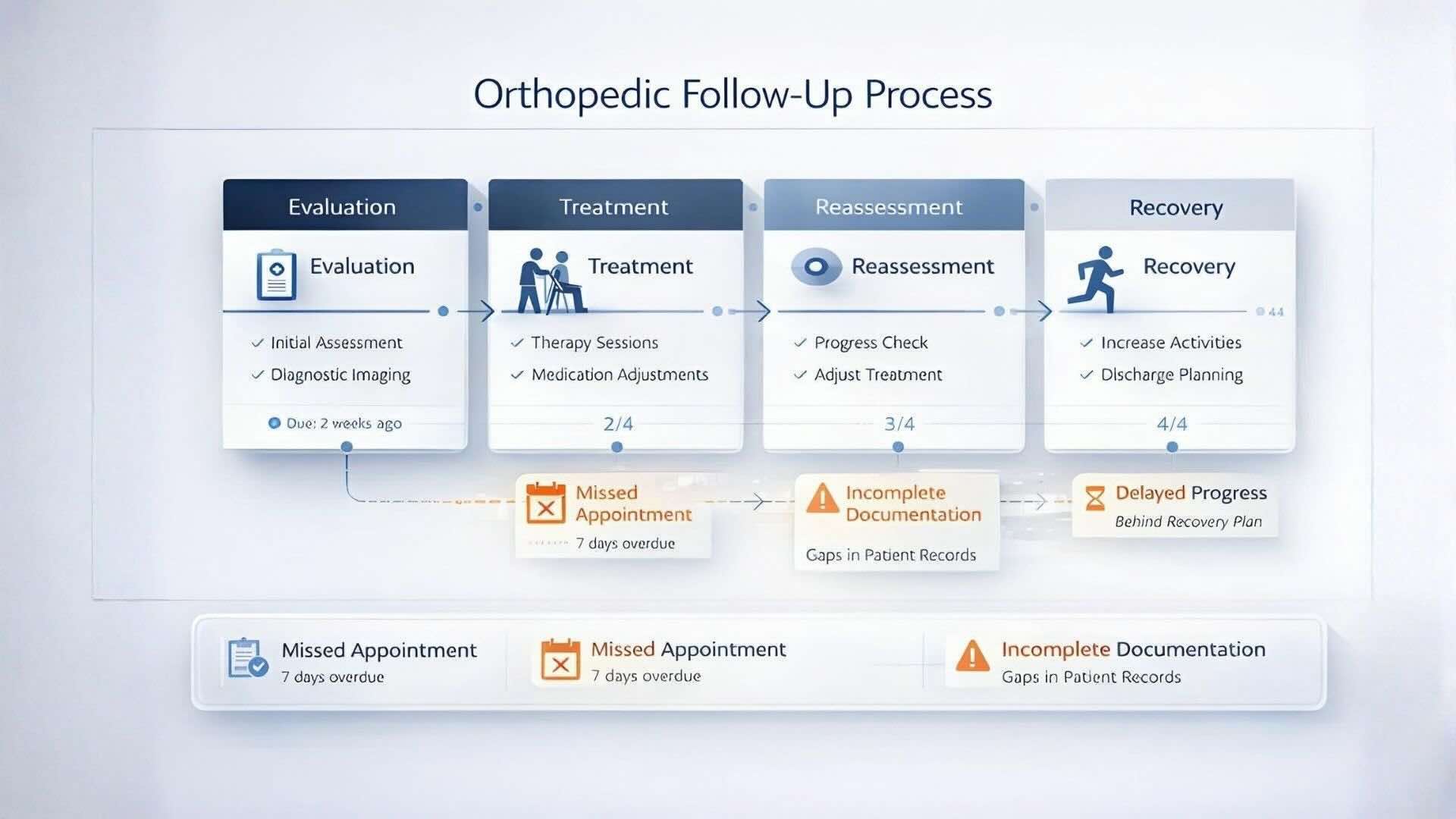
Orthopedic cases usually do not weaken all at once. They tend to weaken gradually as documentation gaps appear and care consistency is lost.
- Missed appointments create gaps in the treatment timeline.
- Incomplete progress notes weaken medical record consistency.
- Poor provider coordination creates conflicting documentation.
In many cases, the breakdown is subtle at first. A missed appointment may seem minor, and a delayed therapy session may appear harmless. However, over time, these small disruptions create a fragmented medical record.
Patients often scale back follow-up care once symptoms begin to improve. However, as activity levels increase, underlying issues may return or worsen. When this progression is not documented, it creates gaps that weaken both treatment clarity and case strength.
Common Mistakes in Orthopedic Injury Follow-Up
Common follow-up mistakes include ending treatment too early, failing to report new or worsening symptoms, and allowing communication between providers to become inconsistent. These issues disrupt treatment continuity and create noticeable gaps in the medical record.
Patients may assume improvement means recovery is complete, but many orthopedic injuries evolve over time. Without consistent follow-up, these changes may not be recorded, making the injury harder to evaluate and defend.
What Effective Orthopedic Injury Follow-Up Should Include
Effective orthopedic injury follow-up should do more than confirm that appointments were attended. It should create a structured record of how the injury is progressing, how the patient is functioning, and whether the treatment plan remains appropriate.
A strong follow-up process should include consistent symptom tracking, documentation of physical limitations, reassessment when recovery slows or changes, and clear communication between providers. If symptoms persist beyond expected recovery timelines, the record should also reflect whether additional imaging, specialist review, or treatment adjustments were needed.
This level of follow-up helps keep the treatment process organized and the medical record more coherent. Without it, even legitimate injuries can begin to look inconsistent over time.
Why Documentation Carries So Much Weight in Orthopedic Claims
Orthopedic claims rely heavily on how clearly the medical record shows the injury’s progression over time not just what was identified at the initial diagnosis.
What Strong Orthopedic Documentation Should Show
Strong orthopedic documentation should show more than the fact that an injury was diagnosed. It should clearly reflect how the condition affected the patient over time, how treatment progressed, and why continued care remained necessary.
In personal injury claims, a strong record documents symptom progression, functional limitations, treatment response, and any changes in mobility, strength, or daily activity. It should also explain why additional therapy, imaging, specialist evaluation, or follow-up care was recommended when recovery did not progress as expected.
When this level of documentation is consistent, it creates a clearer medical narrative from the initial injury through the later stages of recovery. That continuity makes the case easier to evaluate, easier to support, and harder to challenge.
Why Coordination After Orthopedic Injury Is So Important
Orthopedic cases often involve multiple providers, including specialists, therapists, and imaging centers. Without coordination, treatment becomes fragmented.
Maintaining coordination after an orthopedic injury helps ensure that all providers are working from the same medical picture.
This is especially important in cases involving spine and back injuries, where symptoms often develop gradually and require consistent long-term documentation.
When communication breaks down, records become inconsistent. Therapy notes may not align with specialist findings, and imaging may lack follow-up. This fragmentation weakens both documentation and case strength.
Strong provider alignment ensures a cohesive medical narrative.
What Insurers Look for in Orthopedic Injury Cases
Insurance companies evaluate consistency, continuity, and credibility. They look for clear injury progression and treatment logic.
A case with gaps in care or inconsistent documentation raises concerns. Even legitimate injuries may appear weaker if the record lacks clarity. This is one of the main reasons why orthopedic cases need ongoing care.
Consistent orthopedic injury follow-up helps establish clear causation and strengthens the overall value of the case. How treatment delays impact case value is an important consideration when gaps in care begin to affect outcomes.
Long-Term Recovery Requires Continuous Reassessment
Recovery in orthopedic cases is rarely defined by pain reduction alone. A patient may report some improvement while still experiencing reduced mobility, weakness, instability, or limitations in daily activity. Without continued reassessment, those ongoing issues may never be fully documented.
Continuous follow-up helps show whether the patient is truly recovering or simply adapting to unresolved limitations. In personal injury claims, that distinction matters. It affects how the injury is understood, how future care is justified, and how the long-term impact of the case is evaluated.
Why Ongoing Evaluation Protects the Case
Patients may improve partially but still experience functional limitations. Without follow-up, these limitations may not be properly documented, making the case appear less severe.
Consistent orthopedic injury follow-up ensures that recovery is fully documented and medically supported.
Conclusion
Orthopedic injury cases often lose strength not because the injury was minor, but because follow-up becomes inconsistent, documentation loses continuity, and treatment no longer reflects a clear progression.
Consistent orthopedic injury follow-up helps preserve the medical timeline, support ongoing treatment decisions, and keep provider documentation aligned from start to finish. When that continuity is maintained, the case is easier to understand, support, and defend.
When it is not, even legitimate orthopedic claims can become harder to explain and more vulnerable to challenge.