
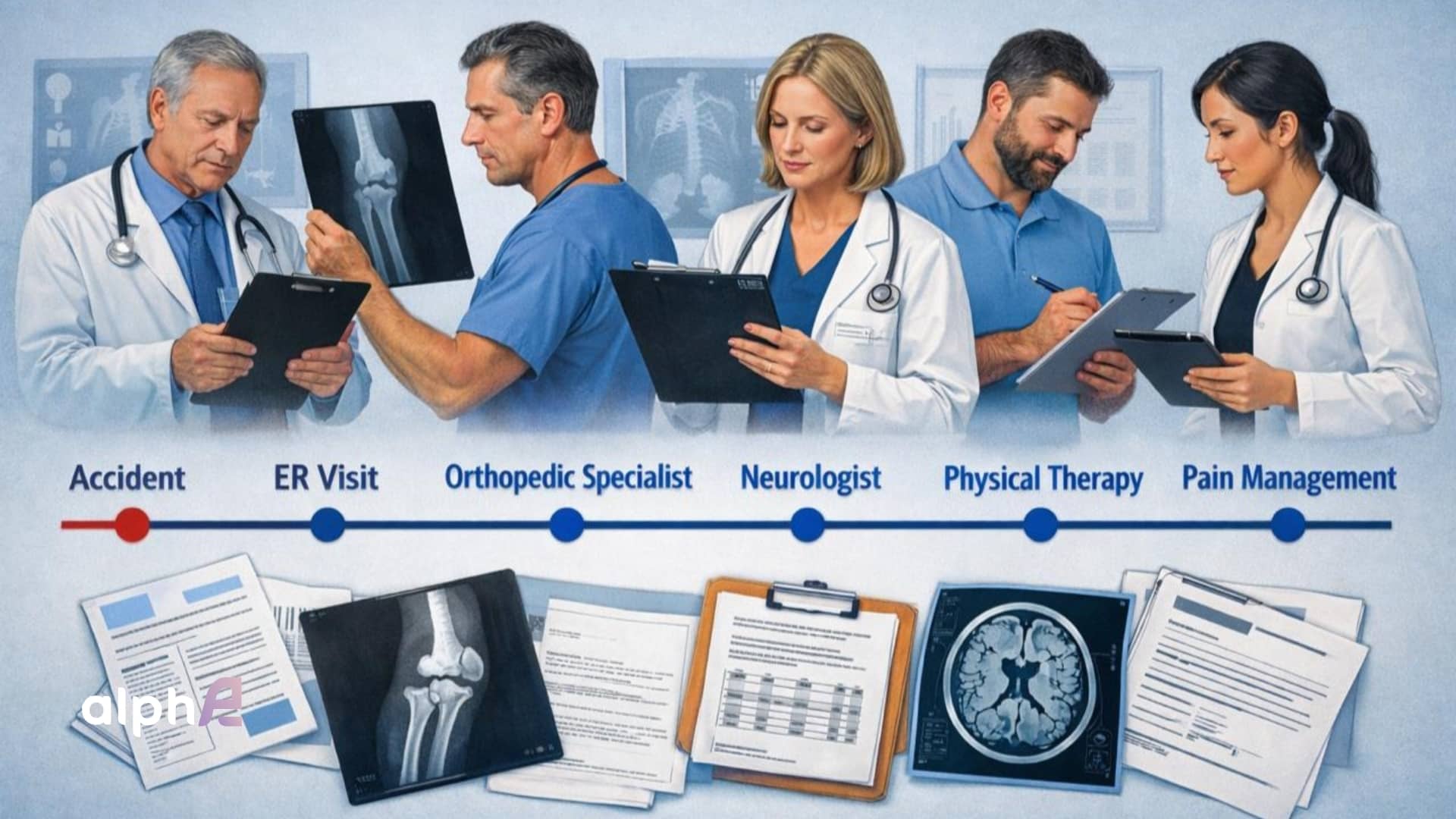
In many serious personal injury cases, medical treatment rarely involves just one doctor or a single stage of care. A client who suffers serious injuries after an accident may see emergency physicians, orthopedic specialists, neurologists, pain management doctors, and physical therapists over the course of several months.
For attorneys handling these cases, the central difficulty is often not proving that an injury occurred but maintaining clear oversight of every stage of medical care. This is where tracking medical treatment in PI cases becomes critical.
Without consistent treatment visibility, medical timelines can become fragmented. Records may be delayed, specialist findings may appear disconnected, and insurance companies may question the seriousness of the injury. In litigation, this lack of clarity can weaken the overall case narrative.
In contrast, when attorneys maintain strong oversight of medical treatment, they gain a much clearer picture of how the injury developed, how the treatment progressed, and how the patient’s condition affects their life.
Why Complex Injury Cases Require Treatment Visibility
In straightforward injury claims, a patient may only visit one or two physicians. However, in more serious accidents, treatment often becomes far more complicated.
A single injury claim may involve several providers such as orthopedic surgeons, imaging centers, neurologists, and rehabilitation specialists. Each provider produces their own documentation and clinical findings.
Over time, these medical records need to align in a way that clearly explains how the injury developed and how treatment progressed.
This complexity is exactly why managing complex injury treatment requires careful coordination. When medical documentation is scattered across multiple providers, it becomes harder to track the progression of symptoms and treatment decisions.
Legal professionals consistently emphasize that medical documentation forms the foundation of a personal injury claim because it demonstrates both the severity of injuries and the cost of medical care. According to personal injury litigation resources, detailed medical records help establish the connection between the accident and the resulting injuries, making them essential evidence in settlement negotiations and court proceedings.
Without that documentation, even legitimate injuries can become difficult to prove.
Attorneys handling accident-related injuries can explore additional examples of coordinated treatment pathways on the alphaE service page for accident injuries:
The Legal Impact of Poor Treatment Tracking
When attorneys do not actively monitor treatment progress, several problems tend to emerge.
One of the most common issues attorneys encounter when treatment is not properly monitored is a lack of clarity in the medical timeline. If there are gaps between medical visits, insurers may argue that the injury was not serious enough to require ongoing care. These arguments can reduce settlement values significantly.
Another challenge that often appears in complex injury cases is the presence of inconsistent medical documentation between providers. Different specialists may focus on different symptoms, and without coordination, their notes can seem contradictory even when they are not.
Delays in obtaining medical records can also create serious complications during the progression of a personal injury claim. Settlement negotiations often require a complete set of treatment records, and waiting months for documentation can delay case resolution.
Proper monitoring of medical treatment in PI cases helps prevent these issues. When attorneys maintain oversight of treatment progress, they can identify potential problems early and address them before they affect the case.
For a deeper explanation of how fragmented care can destabilize complex injury claims, see the related article:
Why Multi-Provider Injury Cases Become Operationally Unstable
Multi-Provider Treatment Oversight in PI Cases
One of the most difficult aspects of serious injury claims is coordinating care across multiple providers. Each medical specialist approaches the injury from a different perspective, and their documentation reflects that focus.
For example, an orthopedic surgeon may focus on structural damage, while a neurologist documents nerve involvement. A physical therapist may track mobility and functional recovery.
When these records are reviewed separately, they can appear disconnected. However, when they are properly coordinated, they form a comprehensive picture of the injury and its long-term impact.
This is why multi-provider treatment oversight has become increasingly important in modern personal injury litigation.
Effective oversight typically involves:
- tracking specialist referrals and follow-up appointments
- monitoring diagnostic testing such as MRI scans or CT scans
- collecting updated medical records after each visit
- ensuring that treatment plans remain consistent with the documented injury
These steps allow attorneys to maintain a clear view of how treatment evolves over time.
Managing Complex Injury Treatment Across Specialists
In serious accident cases, treatment rarely follows a simple path. Patients often begin with emergency care before being referred to specialists for further evaluation.
As the case progresses, treatment may include imaging studies, pain management procedures, rehabilitation programs, and sometimes surgery.
Each stage of treatment generates new documentation that must be incorporated into the legal case file. This is why many attorneys prioritize tracking medical treatment in PI cases from the earliest stages of representation.
Managing this process requires close attention to several factors. Attorneys must ensure that medical providers are documenting symptoms accurately and that referrals between specialists occur without unnecessary delays.
They must also monitor whether treatment recommendations are being followed consistently. Missed appointments or incomplete therapy sessions can create gaps that insurers may later use to challenge the claim.
In more severe cases such as neurological injuries, coordinated medical oversight becomes even more critical. For example, attorneys can review how complex injury treatment is structured in traumatic brain injury cases here:
When treatment oversight is handled properly, the medical record becomes a clear timeline that demonstrates the severity of the injury and the necessity of ongoing care.
The Role of Medical Documentation in PI Litigation
Medical documentation is often the most important evidence in a personal injury case. Courts and insurance companies rely heavily on medical records to determine the value of a claim, and in many jurisdictions medical documentation is considered one of the primary forms of evidence used to establish causation and damages in personal injury litigation.
These records help establish several critical elements, including the diagnosis of injuries, the treatment required, and the long-term impact on the patient’s health.
According to legal experts, well-documented medical treatment provides objective evidence that supports both the credibility of the claim and the extent of damages being requested.
Medical records typically include physician notes, diagnostic imaging reports, surgical records, therapy notes, and billing statements. When these documents are properly organized, they create a strong foundation for settlement negotiations or trial preparation.
However, if records are incomplete or poorly organized, the defense may argue that the injuries are exaggerated or unrelated to the accident.

How Treatment Visibility Strengthens Case Strategy
When attorneys maintain clear visibility into a client’s treatment progress, several strategic advantages emerge during the legal process.
First, it allows legal teams to identify important medical developments early in the case. New diagnoses, surgical recommendations, or worsening symptoms can significantly affect the value of a claim.
Second, organized medical records make it easier to prepare demand letters and settlement packages. Insurance companies expect detailed documentation, and well-organized records demonstrate professionalism and credibility.
Third, treatment visibility improves trial preparation. When attorneys have a complete medical timeline, they can present a clear narrative showing how the accident caused the injury and how the injury affected the client’s life.
These advantages often lead to stronger negotiation positions and more favorable case outcomes. For this reason, many law firms now prioritize tracking medical treatment in PI cases from the earliest stages of representation.
How alphaE Supports Treatment Visibility
For many law firms, coordinating treatment across multiple medical providers can become overwhelming. Services such as alphaE help law firms coordinate treatment across multiple providers while maintaining clearer oversight of patient care.
alphaE connects attorneys with trusted medical providers and helps coordinate treatment across specialists. This approach allows attorneys to maintain clear oversight of medical care while ensuring that clients receive appropriate treatment.
Through coordinated care networks, attorneys gain access to trusted specialists who understand the documentation and reporting standards required for complex personal injury litigation.
Conclusion
In complex personal injury litigation, the ability to clearly track a client’s medical treatment often becomes one of the most important factors influencing the strength of the case.
When attorneys actively track medical treatment, they gain a clearer understanding of how injuries evolve and how treatment affects the client’s life. This visibility helps ensure that medical documentation remains accurate, timelines remain consistent, and evidence remains strong.
Ultimately, tracking medical treatment in PI cases allows attorneys to present a more compelling narrative, strengthen settlement negotiations, and improve litigation outcomes.
As personal injury cases become increasingly complex, effective treatment oversight will continue to play a crucial role in successful legal strategies.