
In high-stakes personal injury litigation, multi-provider personal injury cases do not become unstable because multiple specialists are involved. They become unstable when the case architecture fails to convert those specialties into negotiation power. Instability begins when the clinical narrative drifts away from a strategic posture. Disconnected timelines, misaligned diagnostics, and inconsistent documentation do not create mere administrative friction; they reposition the file downward within the insurer’s valuation model.
When centralized oversight is absent, evidentiary continuity weakens. Orthopedic findings may not reinforce neurological assessments. Imaging may not align with pain management notes. What appears internally as routine variation is externally interpreted as structural inconsistency. At that point, negotiation optics shift. The focus moves from injury impact to causation doubt, Credibility weight declines, Liability pressure softens and The case transitions from assertive positioning to defensive recovery.
Operational instability in these cases is not a clinical issue. It is a positioning failure that compresses leverage before negotiation even begins.
Intake Friction & Early Structural Risk
The trajectory of multi-provider personal injury cases is frequently shaped within the first 48 to 72 hours after the incident. At this stage, the question is not simply where treatment begins, but how the case is positioned from the outset. If the mechanism of injury, specialist sequencing, and documentation strategy are not aligned early, instability is embedded into the file before negotiation even enters the picture.
In complex trauma scenarios common in Texas motor vehicle collisions and premises incidents, clinical presentation is rarely linear.
This dynamic is particularly visible in premises liability incidents, where delayed symptom presentation often complicates early documentation and specialty coordination.
Orthopedic, neurological, and pain components may emerge simultaneously. Without structured oversight, early documentation fails to establish diagnostic continuity. These initial gaps are difficult to correct later and often reappear during insurer evaluation as credibility weaknesses rather than medical complexity.
Structural Risk Signals at Intake
- Delayed Activation: When treatment initiation is not clearly sequenced, the file reflects inactivity rather than progression, reducing perceived injury intensity.
- Diagnostic Voids: Absence of early objective baselines weakens evidentiary hierarchy and limits future leverage expansion.
- Provider Silos: Specialists operating without narrative alignment create internal contradictions that diminish credibility weight.
- Administrative Bottlenecks: Slow record flow or inconsistent documentation disrupts case visibility and delays strategic positioning.
Intake is not an administrative checkpoint. It is the first leverage inflection point. In integrated personal injury cases, early structural clarity determines whether the file enters negotiation with cohesion or with embedded instability.
Positioning Across Specialties
The structural strength of multi-specialty files depends on evidentiary continuity across disciplines. When orthopedic findings fail to reinforce neurological assessments, or imaging results do not integrate with pain management documentation, the case begins to fragment internally before it is ever evaluated externally. Coordinating multi-provider injury treatment is essential for orthopedic injuries, ensuring that each specialist’s input strengthens the overall claim architecture.
Fragmentation shifts perception. A spine surgeon may document structural pathology while a neuropsychologist identifies cognitive deficits. Without alignment, these findings appear compartmentalized rather than cumulative. Insurers rarely interpret compartmentalization as complexity. They interpret it as separable complaints. Once that perception sets in, leverage narrows.
Medical coordination for complex injuries requires narrative alignment across providers. Each diagnostic finding should reinforce a coherent injury sequence, rather than exist as an isolated clinical observation. When specialists operate within a shared injury framework, the file communicates structural confidence. When they do not, it signals instability.
The issue is not medical disagreement. The issue is evidentiary hierarchy. If diagnostic layers do not build upon one another, credibility weight erodes, and negotiation posture weakens. This type of coordinated treatment ensures that specialty findings reinforce one another within a consistent clinical narrative.

Insurer Interpretation Models in Fragmented Treatment
Insurers do not evaluate files clinically. They evaluate them structurally. When adjusters encounter fragmented medical care in personal injury cases, the case is not interpreted as complex. It is categorized as unstable. Instability reduces perceived leverage before any negotiation begins.
Valuation systems are designed to detect structural inconsistencies in treatment timelines and provider documentation. Once detected, the model shifts from assessing impact to stress-testing coherence.
Primary Instability Signals in Insurer Review
Treatment Gaps as Recovery Signals
Interruptions in care are rarely viewed as logistical issues. They are weighted as evidence of resolution. Without clear sequencing, pauses in treatment compress perceived injury duration.
Degenerative Framing
Where early diagnostics lack narrative integration, findings are reframed as background conditions rather than trauma-driven pathology. Fragmentation makes this reframing easier.
Causation Dilution
When multiple providers document without alignment, injury progression appears segmented rather than cumulative. The result is liability dispersion and reduced pressure.
Strategic response does not require more documents. It requires structural clarity. Organized evidentiary hierarchy, sequencing transparency, and aligned specialist reporting shift the insurer’s evaluation model from instability detection to impact assessment. Without that shift, valuation compression becomes the default outcome.
Valuation Compression & Leverage Erosion
Valuation compression is the natural outcome of operational friction. In multi-provider PI cases, settlement leverage depends on the permanence of the injury and the clarity of future care requirements. When specialists do not provide structured projections, such as anticipated hardware removal or revision surgeries, the case leaves strategic value unrealized.
This erosion of leverage is most apparent in high-complexity claims like Traumatic Brain Injury or multi-level Spine & Back Injuries. These files require longitudinal symptom tracking to demonstrate lasting functional impact. Cases with fragmented medical care in personal injury cases obscure the progression, weakening credibility weight and enabling defensive narratives even when pathology is significant.
Medical coordination for complex injuries ensures that all diagnostic and narrative records are aligned from intake onward. Structured alignment transforms a multi-provider file from a disjointed collection of notes into a coherent evidentiary architecture, preserving leverage and maximizing negotiation potential. Without this coordination, operational gaps translate directly into valuation compression and reduced influence at the negotiation table.
Strategic Stabilization: Reframing the Case Architecture
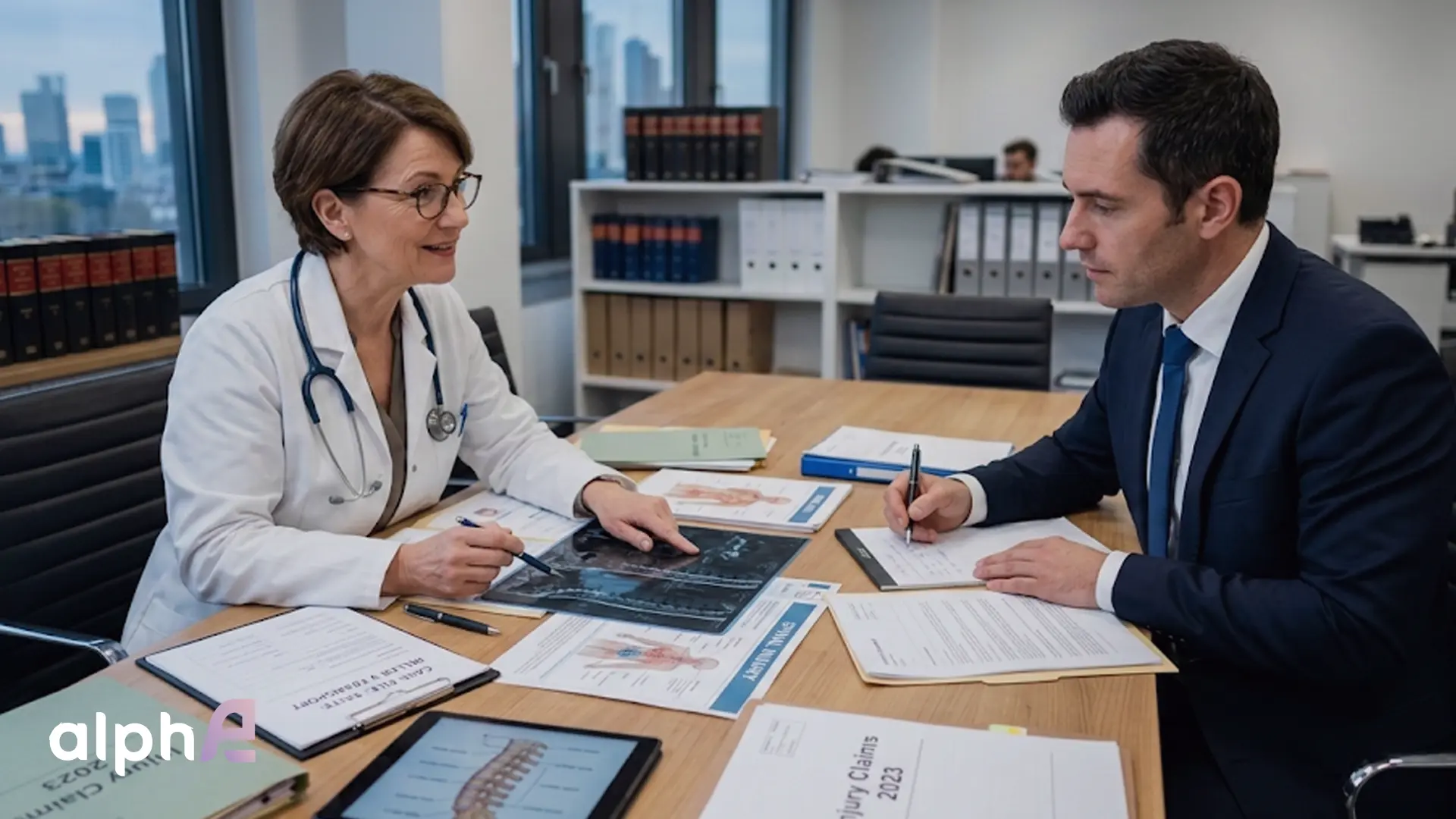
Stabilizing the architecture of multi-provider personal injury cases requires a deliberate shift from reactive medical management to proactive, strategic oversight. From day one, every placement, timeline, and documentation step must align with the overall positioning of the case, ensuring that every element strengthens the evidentiary hierarchy and supports the firm’s negotiation posture.
At alphaE, we approach medical coordination for complex injuries as a form of strategic case architecture. Each specialist interaction is evaluated for its contribution to credibility weight, evidentiary continuity, and settlement leverage. When coordinating multi-provider injury treatment at this level, potential operational instability transforms into a unified, high-value narrative that maximizes the impact of every clinical finding.
Unified Specialist Pathways
All providers, including orthopedists, neurologists, and pain management specialists, must operate within the same structural framework. Their documentation should reinforce, rather than contradict, the overall case architecture. Coordinating multi-specialty care plans ensures that each specialist contributes to a cohesive clinical narrative rather than producing isolated documentation.
Continuous Case Visibility
Maintaining a single point of contact for all medical coordination eliminates silos and ensures that critical diagnostic findings flow seamlessly to the legal team. Real-time situational awareness allows attorneys to track progression, anticipate gaps, and strategically sequence interventions. This level of oversight converts routine medical management into a tactical advantage, preserving leverage throughout the lifecycle of the case.
Litigation-Ready Documentation
Every discharge summary, diagnostic report, and narrative must be formatted to clearly support the injury mechanism, functional limitations, and anticipated future care needs. Proper documentation transforms the case file from a set of clinical notes into a strategic instrument for negotiation. When multi-provider treatment is coordinated with structural precision, the case file evolves from operational instability into a litigation-ready evidentiary record. The attorney can exert maximum liability pressure, and the clinical evidence becomes an unassailable backbone for advocacy and settlement strategy.

Conclusion
In the final analysis, managing multi-provider personal injury cases is not merely an administrative exercise. It is a strategic function that shapes the ultimate negotiation and settlement potential. Operational instability arises when the medical narrative fragments into disconnected instances of care rather than forming a cohesive story of trauma, treatment, and functional impact. Such fragmentation diminishes credibility, creates openings for defensive reinterpretation, and erodes settlement leverage.
Strategic stabilization depends on coordinating multi-provider treatment within a centralized, expert-driven framework. Objective diagnostic baselines, aligned specialty reporting, and continuous evidentiary oversight transform the medical record into a structured, high-leverage asset. Each specialist’s contribution reinforces the overall case architecture, ensuring that no gap or inconsistency can weaken the perception of injury severity.
By treating medical logistics as leverage rather than overhead, firms convert operational coordination into negotiation power. When executed consistently, multi-provider personal injury cases evolve from fragmented files into cohesive, defensible narratives. The result is a robust leverage architecture that maximizes settlement posture, protects credibility, and positions the firm to achieve the highest strategic outcome possible.