
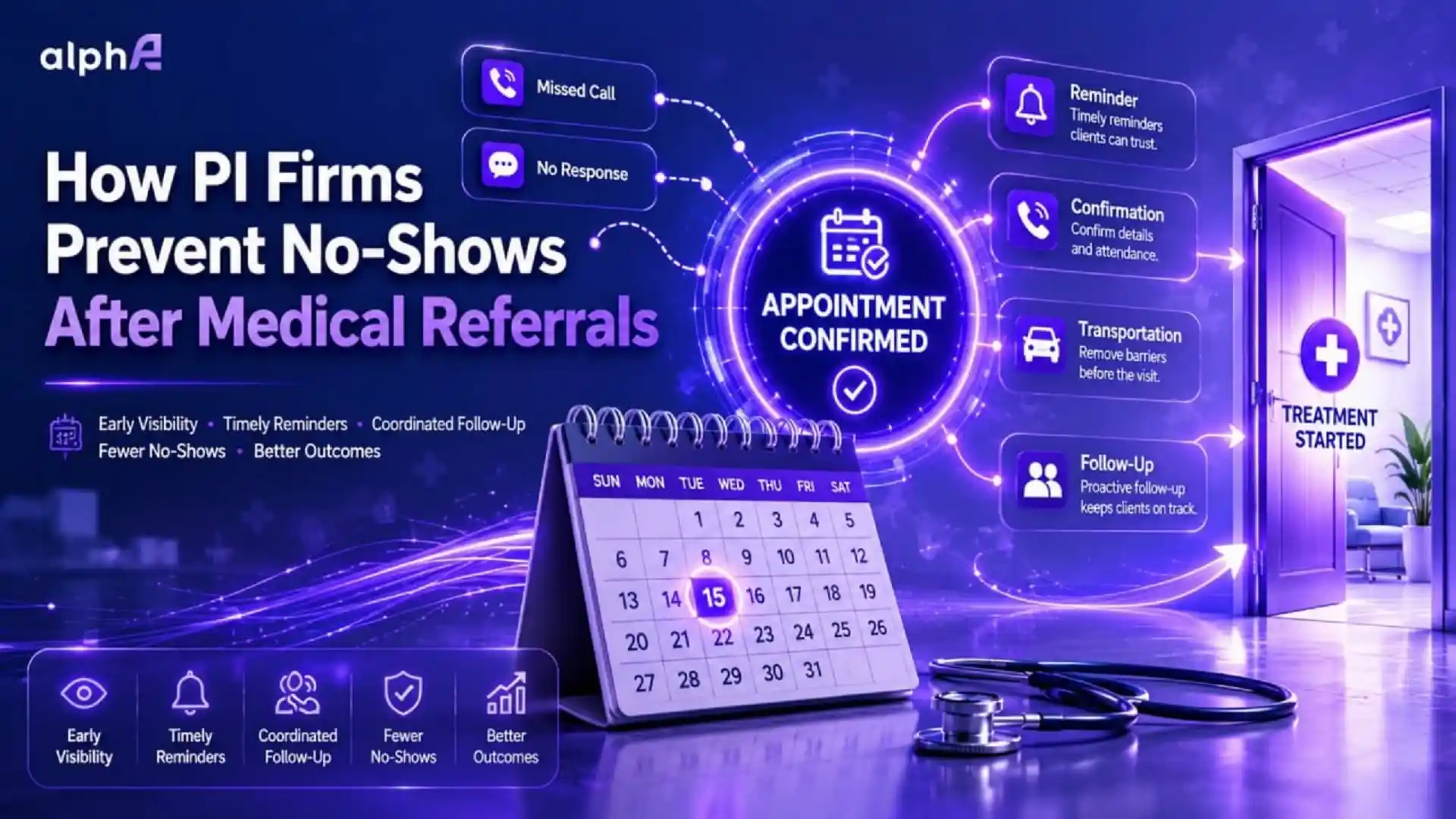
Most PI no-shows do not start when a client decides care is not important. They usually start earlier, in the quiet gap between referral sent and appointment confirmed, when the provider has tried once, the client missed the call, and the firm believes scheduling is already moving.
To prevent no-shows after medical referrals, firms need to see that gap before it becomes a missed visit. The issue is rarely one reminder. It is unclear appointment details, weak confirmation, work or transportation conflicts, and no clear owner for follow-up.
In a PI case, that missed visit can affect treatment continuity, records timing, and the way the timeline reads later. This article explains how firms can use better reminders, provider coordination, and same-day follow-up to keep clients, care, and documentation moving together.
The goal is not to blame the client; it is to make no-show risk visible early.
Why No-Shows Happen After PI Medical Referrals
One common breakdown is simple: the provider calls once during work hours, the client does not recognize the number, and the case manager later hears that “scheduling was attempted.” On paper, everyone did something. In the file, the appointment was never truly confirmed.
No-shows often grow out of practical friction before the visit ever happens. The client may not recognize the provider’s name, may be unsure about the location, or may not understand why the appointment matters under an LOP. Work schedules, transportation, childcare, pain, and missed calls all become appointment risks.
Clear communication only helps when the client knows what to do next. In PI referrals, that clarity has to show up in the handoff: which provider is calling, what number may appear, what the appointment is for, and what the client should do if they miss the call.

Why PI Firms Need to Prevent No-Shows After Medical Referrals
For a PI firm, a missed medical visit changes more than the calendar. It changes how the treatment timeline reads later. A missed specialist appointment discovered two weeks later is different; the file may show delay without showing why.
That matters for attorneys reviewing treatment continuity, records timing, and demand preparation. When the reason for a missed visit is not captured, staff may later have to rebuild the explanation from memory, provider messages, or client texts.
Firms dealing with personal injury treatment delays need appointment visibility before the visit date. The earlier the risk is visible, the easier it is to prevent no-shows after medical referrals without treating the client as the problem.
Referral Sent Does Not Mean Appointment Confirmed
A referral can be received by the provider and still not be confirmed with the client. That distinction is where many PI teams lose control of the appointment path.
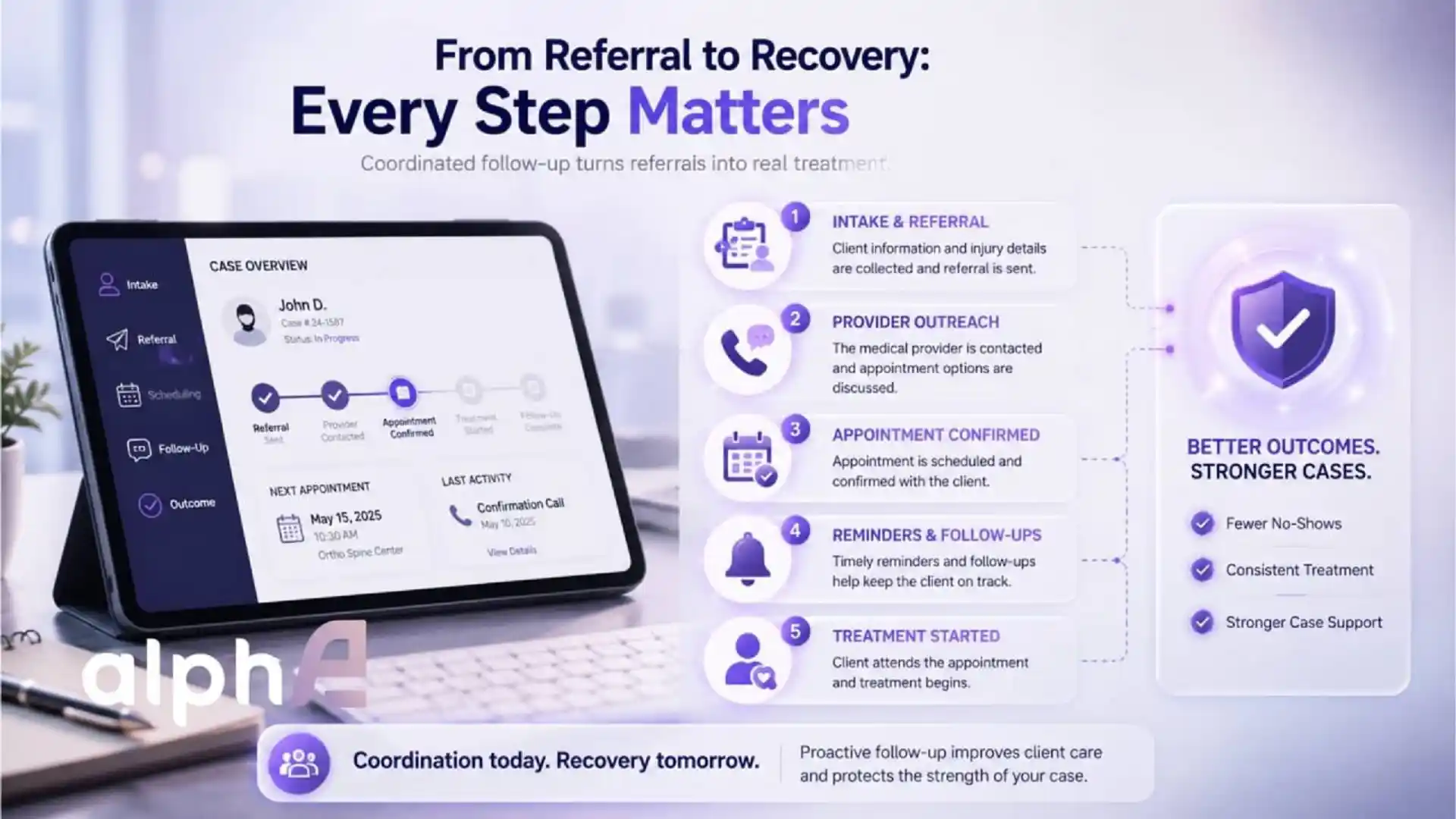
Referral sent means the firm acted. Provider accepted referral means the provider can move forward. Scheduling attempted means someone tried to reach the client. Appointment confirmed means the client knows the date, time, location, and expectation to attend.
Scheduling Attempted Is Not the Same as Client Confirmed
In many PI referrals, “we reached out” is where the uncertainty begins. Did the client answer? Was voicemail left? Did the provider send a text? Is another attempt planned?
Case managers need that difference visible before the visit date. If the client was not actually confirmed, the firm still has time to prevent no-shows after medical referrals through outreach, clarification, or rescheduling support.
Where PI Client Appointment Reminders Break Down
These reminders break down when they are treated as a single notification instead of a short communication sequence. A reminder should prepare the client to attend, not just announce that an appointment exists.
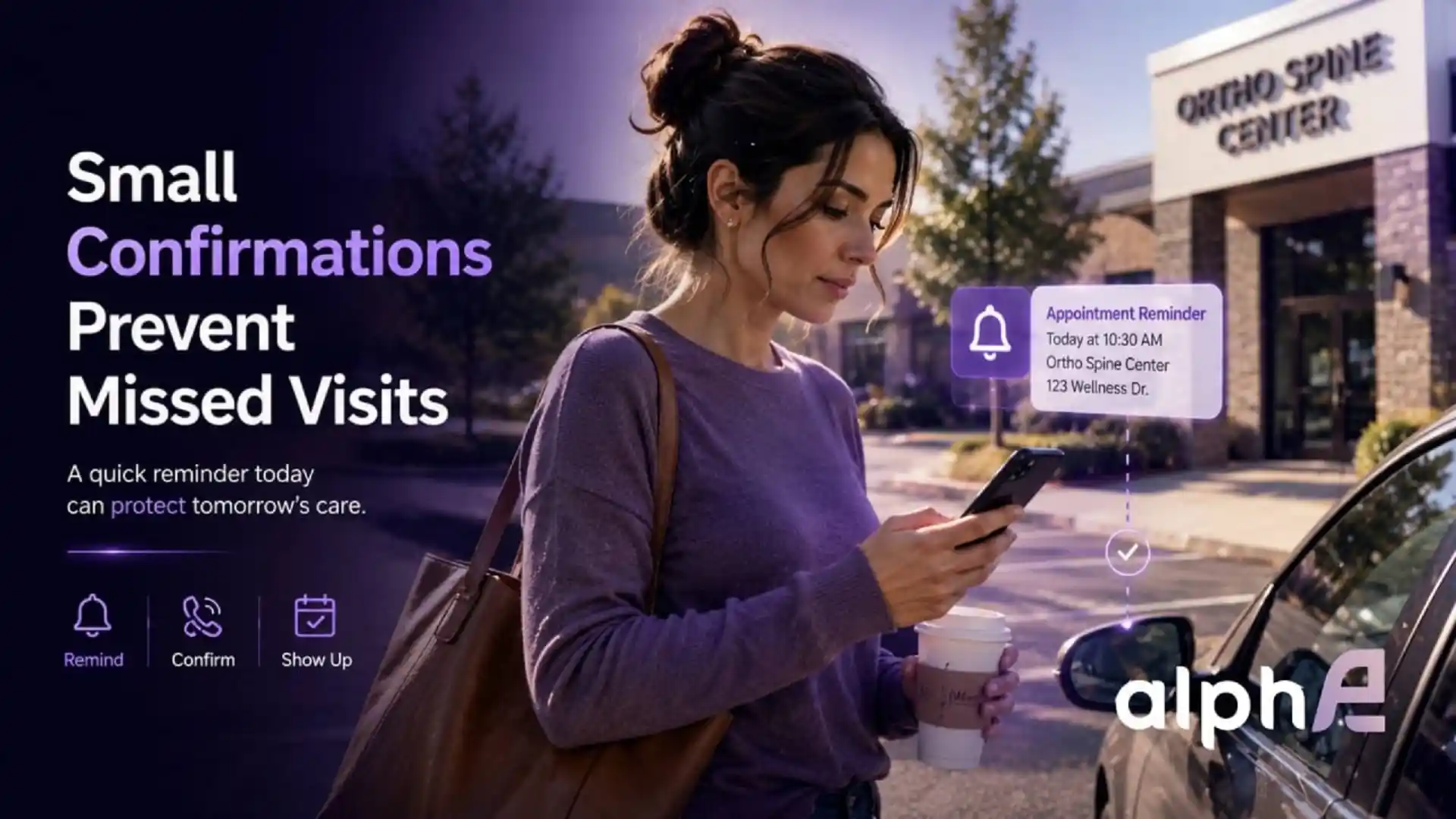
A weak reminder says, “Your appointment is tomorrow.” A useful reminder confirms the provider, location, arrival time, and who the client should contact if work, transportation, or pain interferes.
In practice, a client may still miss the visit because the provider name is unfamiliar, the clinic location is unclear, or the reminder never explains who to call when plans change.
Reminder Details Should Answer the Client’s Next Question
Strong PI client appointment reminders should answer the questions clients are most likely to have before they miss the visit:
- where the client is going and when to arrive
- what the client should bring or expect at check-in
- who to contact if timing, work, or transportation becomes a problem
The Agency for Healthcare Research and Quality describes care coordination as organizing activities and sharing information among the people involved in care. In PI coordination, PI client appointment reminders do that work at the appointment level: they confirm where the client is going, whether the client can attend, and who needs to act if a barrier appears.
How Missed Visits Create Treatment and Documentation Gaps
A missed visit becomes more serious when the firm learns about it too late. If the provider reports the no-show the same day, the case manager can contact the client, document the reason, and help reset the appointment. That early response is one reason firms work to prevent no-shows after medical referrals before the visit is lost.
If no one catches it until the next records check, the impact is different. Treatment did not start, records are still pending, and the attorney may see an unexplained gap between referral and care.
The National Academies have emphasized continuity across care experiences. In a PI file, that continuity is practical: referral received, appointment confirmed, treatment started, documentation returned. Firms trying to reduce patient no-shows need that sequence protected before a missed visit becomes an unexplained gap in the file.
Why Medical Referral Follow-Up Must Include Rescheduling Ownership
The workflow also needs to define what happens if the client misses the visit.
One common breakdown happens after the no-show notice. The provider waits for the client to call back. The client is unsure whether they can still be seen. The firm does not know treatment failed to start. Without an owner, the appointment stays missed.
One detail that often separates a managed no-show from a drifting file is how quickly the provider reports the missed visit back to the firm. If the clinic marks the client as a no-show but the case team does not see it until the next records check, the window for fast recovery is already closing. A clean workflow should make no-show reporting part of the referral loop, not an afterthought.
Same-Day Response Keeps the Gap From Growing
Same-day response turns a missed visit into a managed event. The case manager contacts the client, identifies the reason, documents it, and helps coordinate the rescheduled appointment while the details are still fresh.
That response is not about scolding the client. It is how firms prevent no-shows after medical referrals from becoming unexplained gaps.
Rescheduled Appointments Still Need Tracking
A rescheduled appointment still needs confirmation, reminder activity, and visibility through treatment started.
Medical referral follow-up works best when everyone can see who owns the next action: provider, client, case manager, scheduler, or records team. Otherwise, the second appointment can fail quietly because the same work, transportation, or contact issue was never resolved.
What Case Managers Need to Know Before the Appointment Date
The best time to reduce patient no-shows is before the appointment date, while the case manager can still confirm details, surface barriers, or help the client reconnect with the provider.
A useful pre-appointment view should show whether scheduling was attempted, whether the client confirmed, whether PI client appointment reminders reached the client, and whether any concern surfaced before the visit.
Work, Transportation, and Contact Issues Should Surface Early
Many PI clients are dealing with pain, lost work time, unreliable transportation, unfamiliar provider locations, or childcare problems. Treating every no-show as client behavior misses the operational reality.
Coordination only helps if barriers surface before care is interrupted. In PI referrals, that means work conflicts, missed calls, transportation issues, and unclear provider details should be visible before the provider marks the appointment missed.
What It Takes to Prevent No-Shows After Medical Referrals
A strong no-show prevention workflow connects each step between referral received and treatment started instead of relying on one last-minute text.
A practical workflow should show:
- referral received and provider acceptance confirmed
- appointment confirmed with reminder response captured
- missed visit reported, rescheduled, and tracked through treatment started
Firms prevent no-shows after medical referrals by making the full path visible before a last-minute reminder becomes the only safety net. The process should also show what happens after the visit: treatment started, records pending, documentation returned, and follow-up recommendations noted.
When the full path is visible, firms can reduce patient no-shows without rebuilding appointment status from calls, reminders, and provider updates.
Frequently Asked Questions About Preventing No-Shows After Medical Referrals
Why do no-shows happen after PI medical referrals?
No-shows often happen when the appointment path is unclear after the referral is sent. The provider may call once, the client may miss the call, or the firm may assume scheduling is moving before the appointment is actually confirmed.
How can PI firms prevent no-shows after medical referrals?
PI firms can prevent no-shows after medical referrals by confirming that the client received appointment details, understands the provider and location, has a clear contact path, and has support if work, transportation, pain, or scheduling conflicts appear before the visit.
What should PI client appointment reminders include?
PI client appointment reminders should include the provider name, appointment date and time, location, arrival instructions, what the client should bring, and who to contact if work, transportation, childcare, or pain makes attendance difficult.
How does medical referral follow-up reduce patient no-shows?
Medical referral follow-up reduces patient no-shows by keeping scheduling attempts, client confirmation, missed calls, rescheduling needs, and treatment start visible before the appointment is missed or the treatment timeline develops a gap.
Why is same-day no-show response important in PI cases?
Same-day no-show response is important because the case manager can contact the client, document the reason, and help reschedule while the details are still fresh. This prevents a missed appointment from becoming an unexplained treatment gap.
Final Takeaway: Make No-Show Risk Visible Before the Visit Is Missed
To prevent no-shows after medical referrals, PI firms need more than another reminder on the calendar. They need a workflow that proves the client was reached, the appointment was understood, and any barrier was surfaced before the visit date.
When the provider reports a missed appointment days later, the firm is already reacting. Stronger coordination moves that work earlier: confirm the details, document the client response, assign ownership for conflicts, and make same-day rescheduling part of the referral loop.
The next step is practical. Build a process where no-show risk is visible before treatment stalls, records remain pending, or the case timeline becomes harder to explain.
alphaE helps Texas PI firms reduce patient no-shows by keeping referral status, appointment confirmation, reminder follow-up, rescheduling ownership, and medical documentation visible from referral to treatment start.