
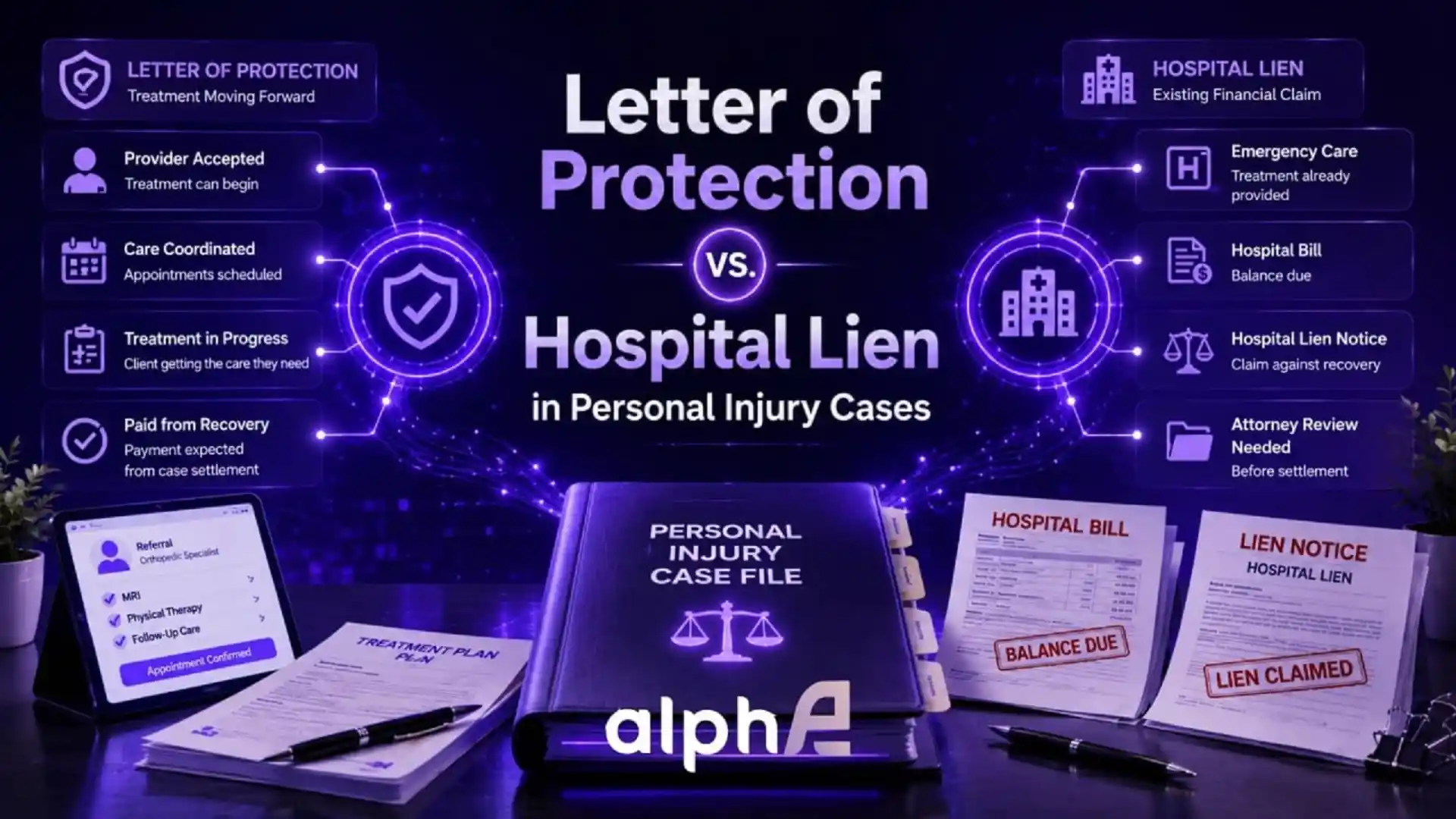
Letter of protection vs hospital lien is an important distinction in personal injury case management. A letter of protection is usually used to help an injured client access treatment with payment expected from a future recovery, while a hospital lien usually relates to hospital or emergency care that has already been provided and may create a claim against the client’s recovery.
For PI law firms, the difference matters because LOP-based treatment, hospital lien awareness, medical records, bills, and settlement preparation all need to stay visible inside the case workflow. If the file does not show which charges belong to coordinated LOP treatment and which may involve prior hospital care, the team can lose visibility fast. Records may arrive without billing context, providers may ask the wrong question, and the attorney may later need a clean settlement picture that the file is not ready to provide.
The practical difference shows up inside the PI workflow: provider communication, documentation tracking, lien awareness, settlement preparation, and whether billing status stays visible before it becomes a case problem.
Why PI Firms Need to Understand Letter of Protection vs. Hospital Lien
PI teams do not manage billing status in theory. They deal with it while coordinating referrals, communicating with providers, requesting records, updating the attorney, and preparing the file for review.
A letter of protection is often used to help an injured client access treatment when payment is expected from a future case recovery. A hospital lien, depending on the facts, often appears after hospital or emergency care has already been provided and a qualifying provider asserts a claim against a recovery.
Texas Property Code Chapter 55 addresses hospital and emergency medical services liens. For the PI team, letter of protection vs hospital lien is a visibility issue: who expects payment, when the issue appears, and what needs attorney review before settlement.
What a Letter of Protection Means in a PI Treatment Workflow

A letter of protection helps create a treatment pathway when a provider agrees to treat with payment expected later rather than at the time of service. In PI case work, that can matter when a client needs orthopedic care, imaging, therapy, pain management, or other follow-up and cannot pay upfront.
The provider usually needs clear referral information before accepting the case: injury context, attorney contact, available records, claim background, and billing expectations. A strong letter of protection personal injury workflow keeps that handoff from turning into repeated calls and delayed scheduling.
A Letter of Protection Is a Coordination Tool, Not Just a Payment Promise
A letter of protection personal injury workflow is not just a signed document. It affects whether the provider accepts the referral, how quickly the client is scheduled, what records the provider expects, and how the firm tracks treatment progress.
If the LOP is unclear, the provider may pause review. If the case manager does not know whether the referral is LOP-based, the client may get mixed messages about payment. That is why letter of protection vs hospital lien should be identified before treatment coordination gets too far.
How a Hospital Lien Personal Injury Case Can Affect Settlement Visibility
A hospital lien usually enters the file from a different direction. The client may have received emergency care before the PI firm coordinated specialty treatment. The firm may not see the lien issue until records, bills, or a notice arrive later.
A Hospital Lien Usually Comes From Treatment Already Provided
A hospital lien personal injury case is often connected to hospital or emergency care that has already happened. It is not the same as asking a new provider to treat under an LOP.
That distinction matters because a firm may be coordinating LOP-based orthopedic care while also tracking a hospital lien from emergency treatment. If the team treats both as one generic “medical lien,” settlement visibility becomes weaker.
Texas Civil Practice and Remedies Code § 41.0105 relates to recoverable medical expenses paid or incurred, and § 18.001 relates to affidavits concerning cost and necessity of services. Those references do not replace attorney judgment, but they show why bills, records, and proof issues need to stay organized.
Where LOP vs. Medical Lien Confusion Creates Workflow Problems
One common point of confusion is assuming every deferred or unresolved medical bill works the same way.
In practical PI file management:
- an LOP can help move future treatment forward with a willing provider
- a hospital lien often points back to hospital or emergency care already provided
- both can affect settlement review, but they require different tracking
Is an LOP the Same as a Medical Lien?
No. LOP vs medical lien should answer a basic workflow question: are we coordinating treatment under a payment arrangement, or are we tracking a claimed interest connected to medical charges?
The difference affects who the case manager calls, what the provider needs before scheduling, what the attorney may review, and how billing notes should be organized. The file should make that distinction easy to see.
How Letter of Protection vs. Hospital Lien Affects Provider Coordination

The billing posture changes how the firm coordinates with providers. A provider considering LOP-based care wants case context, documentation, and a clear expectation of payment from recovery. A hospital lien usually does not ask the next provider to treat; it signals that a prior provider may need to be accounted for later.
For case managers, the difference affects daily communication. A new specialist may ask whether treatment is under an LOP. A records team may ask whether hospital billing has been flagged. A client may think all medical bills are being handled the same way.
The confusion shows up when one team member schedules new treatment while another checks whether a prior hospital charge has created a settlement issue.
LOP-friendly medical providers need clean referral information. A letter of protection personal injury process should stay separate from lien tracking for prior hospital care. Strong coordination keeps letter of protection vs hospital lien from becoming provider confusion.
What Case Managers Need to Track Before Settlement
Before settlement review, the file needs to show billing status clearly. Case managers are not making legal conclusions; they are keeping the billing story readable.
Before settlement, the file should show:
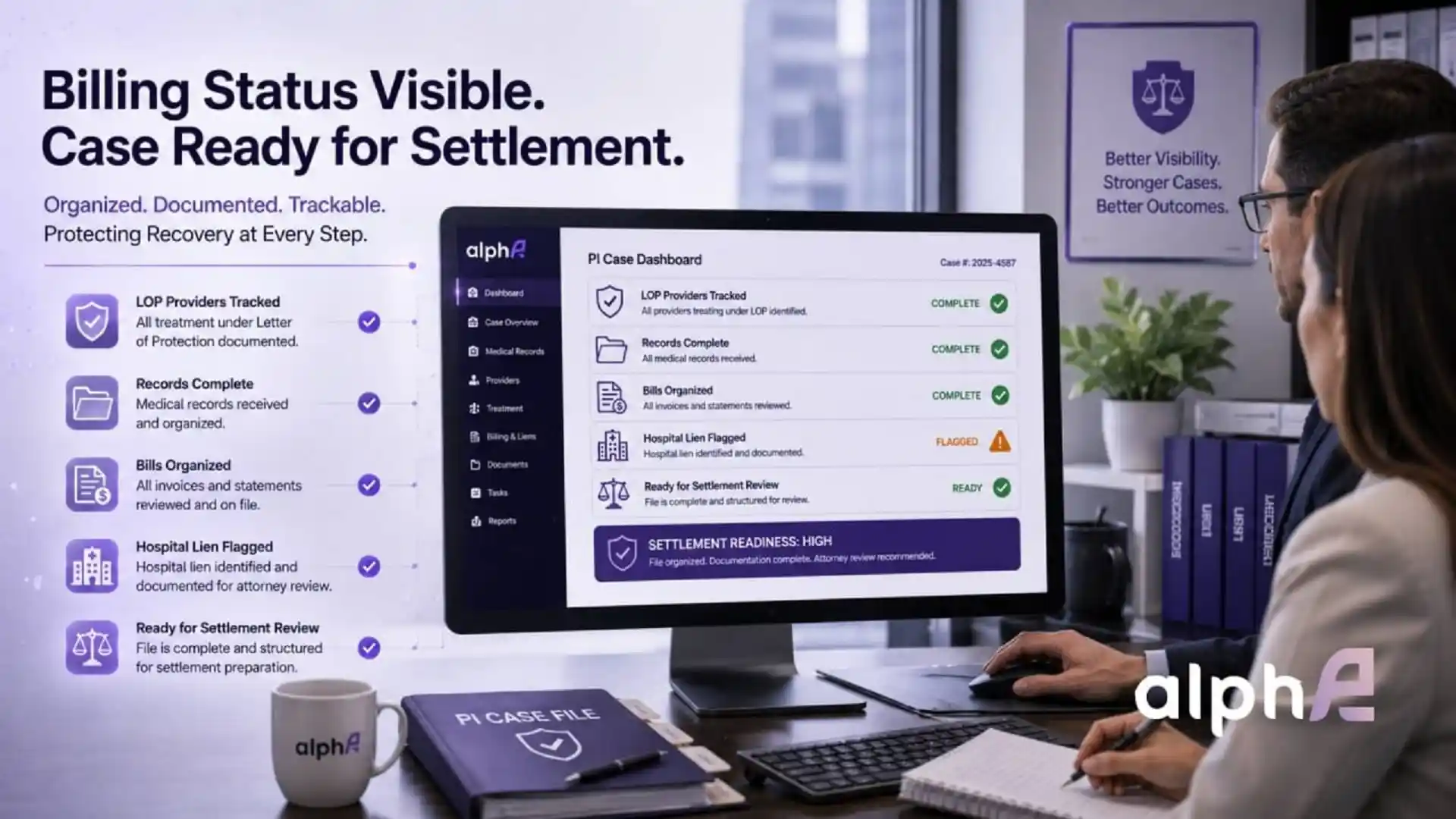
- which providers are working under a letter of protection personal injury arrangement
- whether a hospital lien personal injury case issue has been flagged for attorney review
- whether records, bills, balances, and follow-up recommendations are complete
If letter of protection vs hospital lien is not tracked early, the settlement team may have to rebuild the billing picture from provider emails, records notes, and scattered client updates.
Settlement Review Needs a Clean Billing Picture
The problem often appears when the attorney asks for a clean billing picture and the team has records, bills, and provider notes, but no clear status for who expects payment from recovery.
That can slow review, create extra provider calls, and make the file feel less controlled than it should. Clear tracking gives the attorney a cleaner starting point.
Why Documentation Matters When Billing Status Is Unclear
A medical record can show what care occurred, but it may not explain how the bill is being handled.
The issue usually appears when records are in and treatment is documented, but nobody can quickly tell whether the bill is tied to an LOP, a lien notice, insurance billing, or separate provider follow-up.
The file may have the record, the bill, and the provider note, but still lack the simple answer the attorney needs first: who is expecting payment from the recovery? At that point, letter of protection vs hospital lien becomes part of documentation quality, not just billing status.
Billing Status Should Be Visible Before Records Review
Records review is stronger when the reviewer can see what treatment occurred and how it fits the billing picture.
Useful warning signs include:
- records received without matching billing notes
- provider recommendations with no payment status attached
- hospital billing documents that have not been routed for lien awareness
Clean tracking keeps LOP vs medical lien confusion from showing up at the end of demand preparation.
How Better Medical Coordination Keeps the File Clear
Better coordination does not replace attorney review. It keeps treatment status, LOP status, lien awareness, pending records, and returned documentation in one visible workflow.
In a busy PI practice, the file may include emergency care, imaging, specialty treatment, therapy, missed records, and provider billing questions. Without a coordinated workflow, each item can live in a different note, email, or call log.
When treatment involves multiple providers, treatment visibility in complex PI cases becomes critical. Clear coordination helps the team see what care happened, what is still pending, and which billing issues need attorney attention. It also keeps those questions from becoming late-stage cleanup work.
Final Takeaway
The difference between an LOP and a hospital lien matters most when the file starts moving fast. A provider is waiting on referral details, records are coming in, the attorney is preparing for settlement review, and the team needs to know who expects payment from the recovery.
That is why letter of protection vs hospital lien should not be treated as a late-stage billing question. It should be visible from the first referral, through records follow-up, and into settlement preparation. When the file clearly separates coordinated LOP treatment from prior hospital lien issues, the team can communicate better, avoid last-minute confusion, and give the attorney a cleaner picture to review.
For Texas PI firms, the practical next step is simple: track billing status early, keep provider communication documented, and make lien awareness part of the workflow before it becomes a case problem.