

Provider referrals for PI law firms are critical for helping injured clients access timely medical care after an accident. But referrals alone do not solve the operational challenges that personal injury firms face. Without structured medical coordination, delays in scheduling, treatment gaps, communication breakdowns, and missing documentation can weaken both client outcomes and case development.
Many PI firms already have relationships with LOP-friendly providers, imaging centers, chiropractors, orthopedic specialists, and pain management clinics. The real challenge is what happens after the referral is made. If no one tracks appointments, follows up on treatment progression, or manages documentation requests, even strong personal injury medical referrals can turn into disorganized case timelines.
That is why provider referrals for PI law firms should be treated as part of a larger medical referral management process. Effective medical coordination for PI attorneys helps keep clients moving through care, improves communication between providers and legal teams, and supports a cleaner, more defensible treatment record.
Why PI Firms Need More Than Basic Medical Referrals
Provider referrals can be valuable for PI law firms because injured clients often need fast access to LOP-friendly care. The right provider relationship can reduce friction early, especially when the client needs imaging, orthopedic care, pain management, chiropractic treatment, or physical therapy. But the referral itself only answers one question: who might see the client?
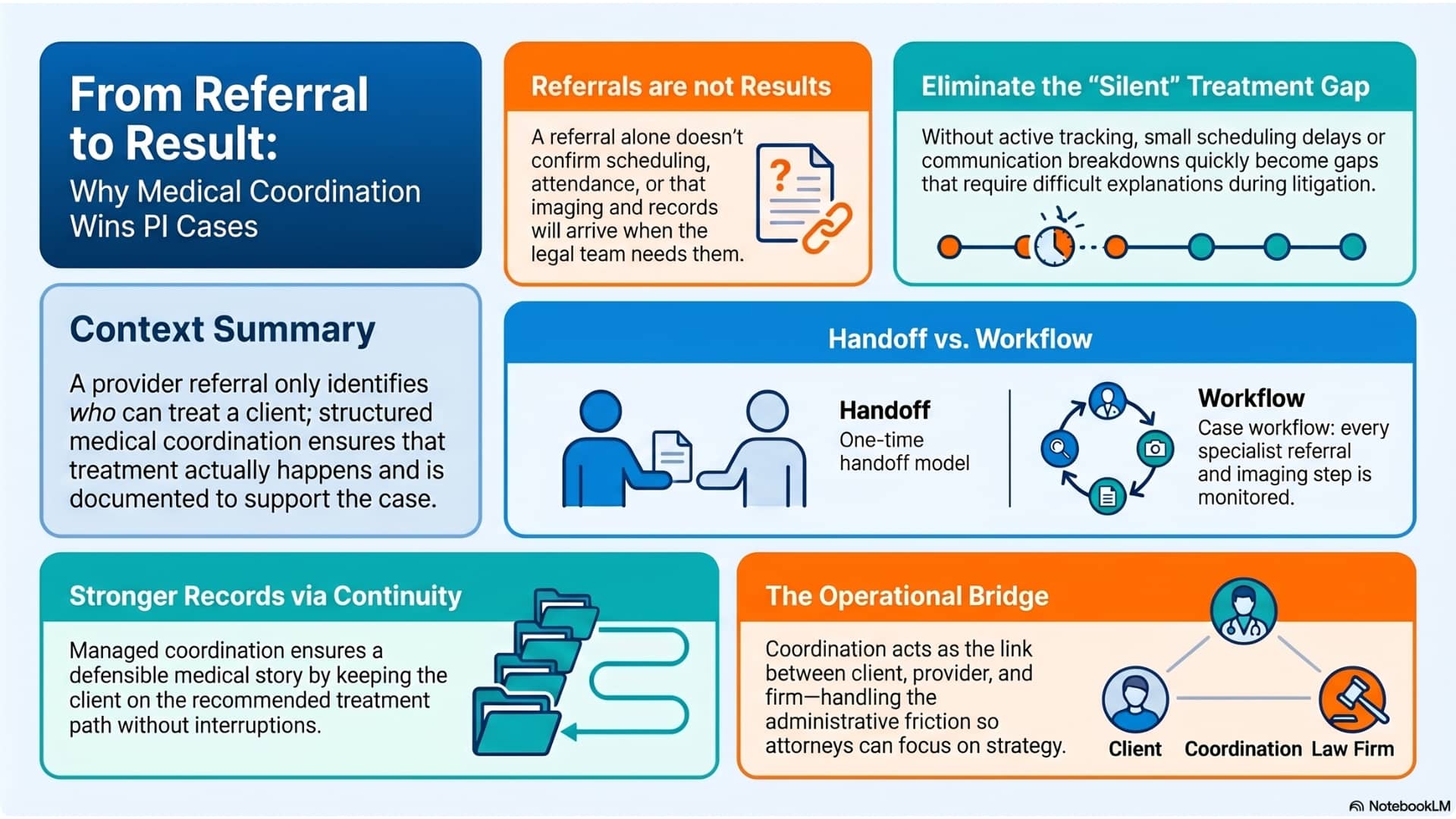
It does not confirm that the first appointment was scheduled. It does not tell the case manager whether the client attended. It does not track whether imaging led to the next referral. And it does not make sure records and bills arrive when the legal team needs them.
This is why personal injury medical referrals should be viewed as part of the case workflow, not as a one-time handoff. The firm is really asking whether the medical side of the case is moving in a way that supports the client and creates a usable record.
Common Problems After Personal Injury Medical Referrals
The most damaging breakdowns often happen after everyone assumes the referral is complete. The firm may believe the client is in care. The client may be waiting for a call. The provider may need more intake details. By the time anyone notices the delay, the medical timeline may already have a gap that requires explanation.
Provider referrals for PI law firms should be judged by what happens after the match, not just by whether a provider name was available. A referral network helps. Managed follow-through is what keeps the case from drifting.
Scheduling Delays
Appointment scheduling is not always easy for an injured client. Pain, work schedules, transportation issues, language barriers, and confusion about the process can all delay the first visit. When no one is tracking the appointment, a small delay can quietly become a treatment gap.
Communication Breakdowns
A law firm needs updates without interfering with clinical judgment. A provider may need basic case information, while the legal team needs to know whether treatment is progressing. Without a clear communication process, both sides spend too much time chasing status.
Documentation Gaps
Medical records, bills, imaging notes, referral notes, and treatment summaries are not just administrative details. They shape how damages are evaluated and how the attorney understands the case. Late documentation forces the legal team to reconstruct the treatment story under pressure.
How Medical Referral Management Supports PI Cases
Medical coordination gives PI attorneys a structured way to manage the parts of the case that referrals alone cannot control. It does not replace legal strategy or medical decision-making. It creates an operational bridge between the client, the provider, and the firm.
Strong coordination should help a firm:
- Match the client with an appropriate LOP-friendly provider based on injury type, location, and specialty need
- Support appointment scheduling so the first visit does not sit unresolved
- Monitor treatment communication without forcing attorneys into constant follow-up
- Track imaging, specialist referrals, and next-step care when the treatment path becomes more complex
- Keep documentation requests visible before records become urgent
This is where alphaE’s medical coordination services fit the actual problem: provider matching is only one part of the process. The larger value is reducing the small delays that weaken the medical timeline.

Benefits of Medical Coordination for PI Attorneys
Some firms measure referral strength by the size of the provider list. A larger list can be useful, but volume does not guarantee fit, responsiveness, clear documentation, or the right specialty path. Provider referrals for PI law firms should be evaluated by how well the provider relationship supports the case type.
A car accident client with possible disc injury may need imaging, pain management, orthopedic evaluation, or spine care. A premises liability client may need careful documentation of pain complaints, diagnostic findings, and treatment continuity. A TBI concern may require a different level of specialty awareness.
That is why medical referral management cannot be reduced to routing a client to the next available office. It requires understanding the injury pattern, the likely treatment sequence, and the documentation attorneys will eventually need. For example, car accident injury coordination may raise different timing issues than premises liability injury support.
Why Referral Quality Matters More Than Referral Volume
When the referral process is unmanaged, the consequences rarely appear immediately. They show up when the attorney reviews the file and finds missed appointments, unexplained treatment gaps, delayed imaging follow-up, or incomplete records. By then, the team may be fixing a problem that could have been caught earlier.
Personal injury medical referrals should help support a defensible medical story. That story depends on continuity: the client reported symptoms, started care, followed the recommended path, and generated records that explain the injury and treatment.
A realistic pattern looks like this: a client is referred after intake, attends the first visit, and then needs imaging. The scan is completed, but no one confirms the next referral. Three weeks later, the client is still waiting. The provider assumed the firm knew. The firm assumed the provider moved the client forward. The client assumed someone would call. That gap can affect care, documentation, and the attorney’s ability to present the case cleanly.
What a Better Provider Referral System Should Include
The referral process works best when ownership is clear from the start. The firm should know who is watching the handoff, who is checking whether the appointment happened, who is following up on the next medical step, and who is keeping documentation from falling behind.
A stronger medical referral management system should include:
- complete intake details before the referral is sent
- referral tracking that confirms the client actually moved into care
- practical status updates that help the firm understand treatment progress
- escalation when appointments are missed, delayed, or unclear
- documentation follow-up tied to the treatment timeline
This level of medical referral management gives attorneys and case managers better visibility. It also improves the client experience because the injured person is less likely to be left navigating unfamiliar treatment steps alone.
Where Medical Coordination Matters Most in PI Cases
Not every case needs the same level of support. A straightforward soft-tissue case may move through care with fewer touchpoints. A more complex injury may involve multiple providers, imaging, specialist review, and longer documentation follow-up. Provider referrals for PI law firms become more useful when the coordination model can adjust to that complexity.
Orthopedic and Spine Injury Cases
Orthopedic and spine injuries often depend on timely follow-up. Missed appointments, delayed imaging review, or unclear specialist handoffs can make the record harder to interpret. For related workflows, orthopedic injury coordination is a useful reference point.
TBI and Complex Injury Cases
TBI concerns, neurological symptoms, and layered complaints require careful communication. The goal is not to direct care. It is to avoid losing track of what the provider recommends next. Medical coordination for PI attorneys helps the legal team stay aware of treatment progress while keeping clinical decisions with the provider.
Delayed or Interrupted Treatment
Treatment gaps can happen for ordinary reasons: transportation, work schedules, confusion, pain, fear, or missed calls. A coordinated process gives the firm a better chance to identify the problem early and help the client get back on track.
How alphaE Supports Provider Referrals for PI Law Firms
For provider referrals for PI law firms to work, the question is not whether a firm has provider relationships. Most established PI firms do. The better question is whether those relationships are supported by a repeatable process that keeps clients moving, keeps communication clear, and keeps documentation aligned with the case timeline.
Provider referrals for PI law firms are important, but they are not enough by themselves. Personal injury medical referrals work best when they are connected to scheduling, communication, follow-up, and records management. That is the difference between handing off a client and managing the medical side of the case with discipline.
For firms that want fewer loose ends and a cleaner treatment record, medical coordination for PI attorneys is the operational layer that turns referrals into a more reliable case-support system. A conversation with alphaE can help a firm identify where its current process is strong, where delays are forming, and where better follow-through could protect both clients and case work.
Conclusion
Provider referrals for PI law firms help injured clients access medical care, but referrals alone do not keep a case organized. Without proper follow-up, scheduling support, and documentation management, treatment gaps and communication issues can quickly affect the medical timeline.
Personal injury medical referrals work best when they are supported by structured medical coordination. By improving communication, tracking treatment progress, and reducing delays, medical coordination for PI attorneys helps firms maintain cleaner records and more consistent case support.
alphaE helps PI law firms strengthen the referral process with coordinated medical support that keeps clients, providers, and legal teams better aligned.