

A referral rarely breaks in one obvious moment. It usually slows down between “sent” and “scheduled,” where everyone assumes the next step is moving until the case manager has to prove it.
PI firms often track medical referral progress only after treatment movement has already stalled. The packet went out with the LOP attached. The provider has the packet and the client’s information. The file note says referral sent. Then the attorney asks whether the appointment is confirmed, the client says no one called, and the provider says the referral is still under review.
At that point, the firm is not looking for a casual update. It needs to know where movement stopped, who owns the next action, and whether the delay is affecting treatment continuity or documentation timing. Referral tracking only works when the workflow stays visible after the packet leaves the firm.
How PI Firms Track Medical Referral Progress After the First Handoff
The first handoff feels clean because it happens inside the firm. A coordinator gathers the referral details, attaches the LOP, sends the packet, and updates the case file.
But the referral has only entered a provider-side workflow. Inside the provider’s office, the file may still need intake review, lien approval, provider review, records verification, and scheduling before the client gets an appointment. Intake may have the referral while provider review is still waiting on imaging, prior records, or an intake callback, delaying scheduling before the legal team realizes treatment has stalled.
The referral may still be alive, but the firm is already past the point where “sent” is enough. When firms track medical referral progress only by asking whether the packet was sent, they miss the stages that control treatment movement.
Why Referral Visibility Matters More Than Basic Follow-Up
Most PI firms already follow up. This is the same operational problem firms face in broader medical-legal coordination, where treatment visibility in complex PI cases helps the legal team understand medical movement while there is still time to correct delays.
Referral Sent Is Not Referral Movement
“Referral sent” only confirms the packet left the firm. A referral is only moving when the next stage is known: LOP review cleared, provider review started, scheduling opened, appointment confirmed, treatment began, or records returned.
The better question is what happened after the packet left the firm.
Pending Is Not a Status Case Managers Can Trust
“Pending” can hide different problems:
- Pending provider review because records or imaging are missing.
- Pending scheduling because the client missed a call.
- Pending documentation because the visit happened but records have not returned.
Each version requires a different response. If the firm does not know which one it is dealing with, the case manager has to reopen the referral from the beginning. Vague PI referral updates create extra work because they show activity without showing the actual blocker. The firms that handle referral tracking best are usually the ones making status ownership visible before delays turn into treatment gaps.
What Case Managers Need From Referral Tracking
Case managers chase updates to find the next actionable fact, not to add another note to the file.
A provider says, “We called the client.” A scheduler says, “We need the imaging report first,” while the attorney only sees time passing between one provider and the next.
Good case manager referral tracking should answer questions that move the file:
- Has the provider accepted the LOP?
- Is the client scheduled, or was contact only attempted?
- Did treatment start, and are records pending?
Those answers tell the case manager whether to call the provider, reach the client, send missing records, or wait for documentation.

Why Manual Chasing Creates Weak Case Information
Manual chasing feels productive because staff are doing visible work. But activity alone does not create a usable referral timeline.
A case note that says “called provider for update” proves someone followed up, but leaves the attorney guessing whether the referral is under review, waiting on records, scheduled, completed, or stalled after a no-show.
The strongest follow-up is specific: “Has this cleared LOP review?” “Was the first visit completed?” “When should records be available?” Over time, repeated chasing creates fragmented status history, where the latest update may live in a voicemail, an email reply, or a case note instead of one reliable referral timeline.
Case manager referral tracking should show where the referral sits now and who owns the next step, so teams do not track medical referral progress in fragments. By the time an attorney asks for status, the file should already show the referral history without staff rebuilding it from callbacks, emails, and provider notes.
How Delayed PI Referral Updates Turn Into Documentation Problems
Teams track medical referral progress better when the reason for a delay is captured while the case is active. It becomes harder when the firm discovers it weeks later with no clear record.
A missed appointment is manageable if the firm knows the same day. If the missed visit is discovered three weeks later, a scheduling issue has already turned into a treatment gap.
The same pattern appears after diagnostic imaging. A client completes an MRI, but the report does not reach the specialist. The attorney sees time passing between imaging and follow-up care.
These post-imaging referral delays are common because the next step depends on results, review, and communication between offices. Without tracking, a missing handoff can look like client inactivity. Timely PI referral updates preserve the reason behind a delay before that context disappears.
A Missed Update Can Become a Treatment Gap
The real problem is losing the reason for the delay while the team still remembers it. If the provider waited on imaging, the client missed a scheduling call, or records were pending after treatment, that should be visible before review.
Otherwise, a provider-side bottleneck can later read like the client stopped treating. Weeks later, staff may still know care happened without being able to clearly explain how it progressed from one provider to the next, especially once demand preparation starts.
The Status Points Firms Need to Track Medical Referral Progress
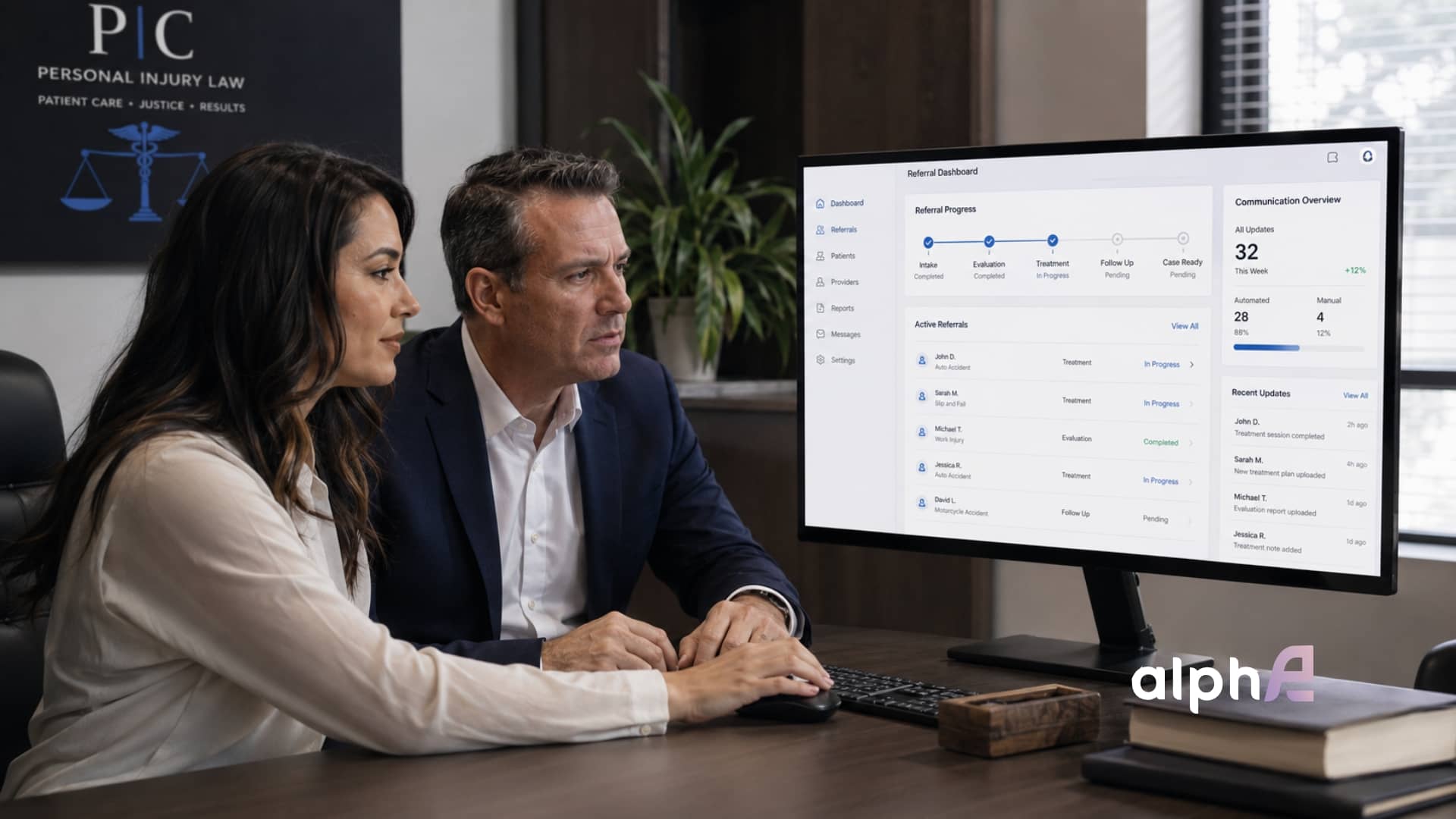
Referral tracking should surface the status points that matter: LOP review, provider acceptance, scheduling attempts, missed visits, records return, and follow-up recommendations.
A practical referral workflow should show:
- Provider review completed or still waiting on imaging, records, or LOP approval.
- Scheduling confirmed, attempted, missed, or rescheduled.
- Treatment started, records pending, or follow-up recommendations outstanding.
This is where PI referral updates and treatment progress tracking become part of PI case documentation. For the law firm, the referral is not useful until documentation is returned, reviewed, and organized.
From Provider Review to Records Returned
If records are delayed, the attorney may know the treatment date without knowing what the provider found, whether follow-up was recommended, or how the visit supports the injury timeline.
A provider may close the referral while visit notes, recommendations, or billing records are still sitting in the intake queue.
Strong case manager referral tracking keeps that post-visit stage visible instead of treating the referral as closed too early.
How Treatment Progress Tracking Keeps the Case Story Intact
A strong chronology should preserve the sequence of care instead of collecting every scheduling note: urgent care to imaging, imaging to specialist review, specialist review to therapy, injections, pain management, or surgical evaluation.
That sequence is what the attorney needs later. When did the MRI lead to the orthopedic referral? Was the first appointment completed or rescheduled? Did records return after treatment started?
By demand preparation, unresolved referral gaps can force staff to rebuild chronology from scattered updates instead of relying on the case file.
What a Better Referral Workflow Looks Like in Practice
A better workflow accounts for slow provider responses and missed client calls. It makes delay visible while it is still actionable and helps the team track medical referral progress without turning every open referral into a daily search project.
Consider an orthopedic referral. The packet goes out Monday. Tuesday, the provider confirms receipt but asks for the MRI report before review. The report is sent that afternoon. Scheduling opens Wednesday. The client confirms after multiple scheduling attempts. If the client misses the visit, the status changes that day, follow-up is assigned, and the rescheduled date is captured.
This matters in orthopedic injury coordination, where evaluation, imaging, specialist follow-up, therapy, and records need to stay connected. Treatment progress tracking becomes most valuable when the legal team no longer has to reconstruct care from scattered notes, delayed records, and partial updates.
A strong workflow should make it obvious whether the next step belongs to the provider, the client, the scheduler, or the case manager.
Final Takeaway
When a PI team has to ask multiple people whether a referral was received, reviewed, scheduled, or documented, the workflow is already creating risk for the treatment timeline.
Referral progress should be visible without relying on memory, scattered notes, or repeated follow-up emails. Each referral should show the current status, the next action, and who is responsible for moving it forward.
For Texas PI firms handling LOP-based care, strong coordination helps prevent treatment gaps, keeps documentation organized, and gives attorneys the medical clarity they need when the file matters most.